
Skip Navigation

Background

The Dugongs vs. The Department of Defense

 
Photo of stamp to commemorate the dugong's designation as a natural monument. English translation: Natural Monument, Dugong (Mermaid), 1966 Ryukyu Ryukyus Postal.
Stamp to commemorate the dugong's designation as a natural monument. English translation: Natural Monument, Dugong (Mermaid), 1966 Ryukyu Ryukyus Postal.

"It was indeed a significant trip... American people over there are paying attention to the lawsuit, thanks to efforts by members the Earthjustice." -- Takuma Higashionna, Save the Dugong Network, Okinawa

Click here for video and high-resolution images

Letter to President Bush and Prime Minister Koizumi from a coalition of US and international conservation groups

The dugong is a large sea mammal related to the manatee and the extinct Steller's sea cow. Its northernmost range is among the coral reefs off Okinawa, Japan. The Okinawa dugong has been listed by the government of Japan since 1955 as a "Natural Monument" under Japan's "Cultural Properties Protection Law." On August 6th, 2007, the Japanese Ministry of Environment listed the Okinawa dugong as "critically endangered" -- the most severely threatened category before "extinct." It has long been revered by native Okinawans as a significant part of their culture and history, celebrated as "sirens" or "mermaids" who bring friendly warnings of tsunamis.

Japanese scientists believe there are as few as 10 dugongs surviving in Okinawan waters, where the mammals feed in beds of seagrass. Strictly vegetarian, these shy, placid creatures are easily spooked by boats and noise.

The United States has a heavy military presence in Okinawa. But in 1996, in an attempt to reduce the U.S. military footprint on the island, the United States agreed to return the Futenma air base to Japan once an alternative site is provided. The new site chosen was off Henoko village, on the northeast coast of the main island, in the very location where the dugong graze among the seagrass on the seabed.

The plan calls for Japan to build a new Marine Corps air-sea base for American use atop these precious seagrass beds -- effectively destroying the remaining habitat of the gentle dugong in Japan. The 'V'-shaped runways would extend 1,800 meters into the bay, permanently disrupting one of the most biologically diverse areas in the Pacific.

The dugong is not the only wildlife threatened by the proposed airbase. Other local species facing danger from the base construction include:

  • Three endangered sea turtles: the hawksbill, loggerhead, and green turtles
  • Threatened birds, including the Okinawa woodpecker and the Okinawa rail
  • Several stands of mangrove trees, including some classified as "protected areas" by the Japanese government.

Construction of the base will also increase water and noise pollution in the area. The new base and the development of the surrounding area for employee housing will threaten the ecologically sensitive Yanbaru forest watershed.

Once the base is built, the potential for devastating oil and chemical spills -- which have occurred at other Okinawan bases -- will increase dramatically.

Earthjustice is working with a coalition of conservation groups from both sides of the Pacific and has filed suit in US District Court in San Francisco against the US Department of Defense. The suit asks the DOD to conduct a complete public analysis to assess the impacts of the proposed construction on the Okinawan dugong, and to consult with the local communities trying to preserve and protect the dugong.

More information:


Video of the Dugong:

Still image from dugong video

Click here for video of a dugong feeding on the seabed.  (YouTube)


Pictures of the Dugong:
(Click thumbnails for larger images)

 
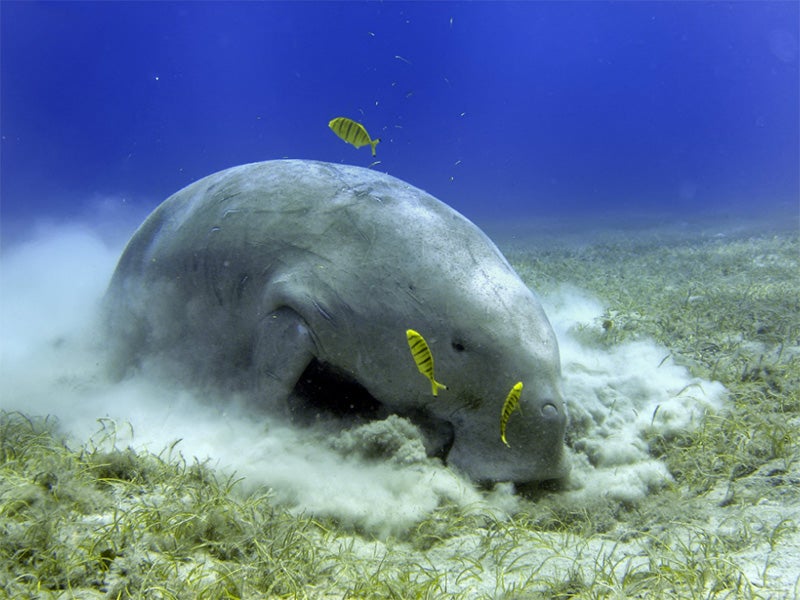
Photo of a dugong preparing to feed in the waters off the Japanese coast.
A dugong prepares to feed in the waters off the Japanese coast
Photo by Suehiro Nitta, courtesy Association to Protect Northernmost Dugong
 
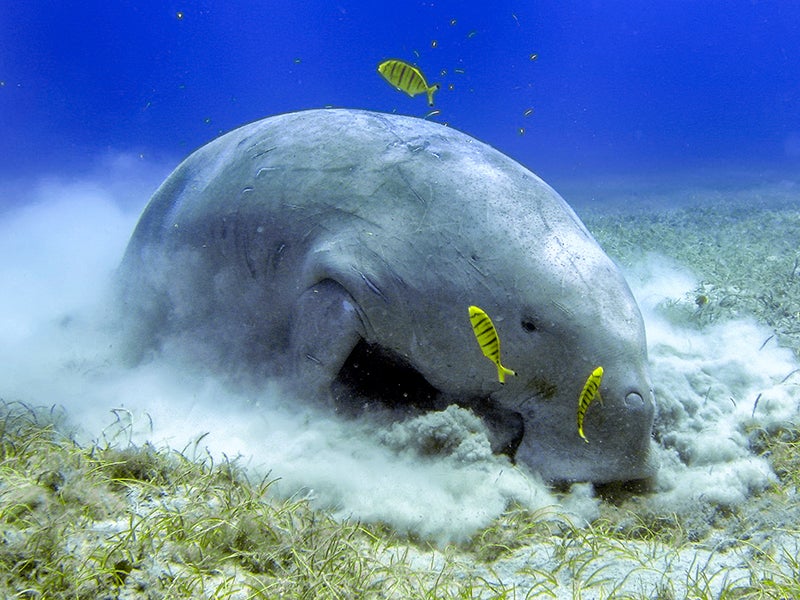
Photo of one of the endangered dugongs off the coast of Okinawa.
One of the endangered dugongs off the coast of Okinawa.
Photo by Suehiro Nitta, courtesy Association to Protect Northernmost Dugong
 
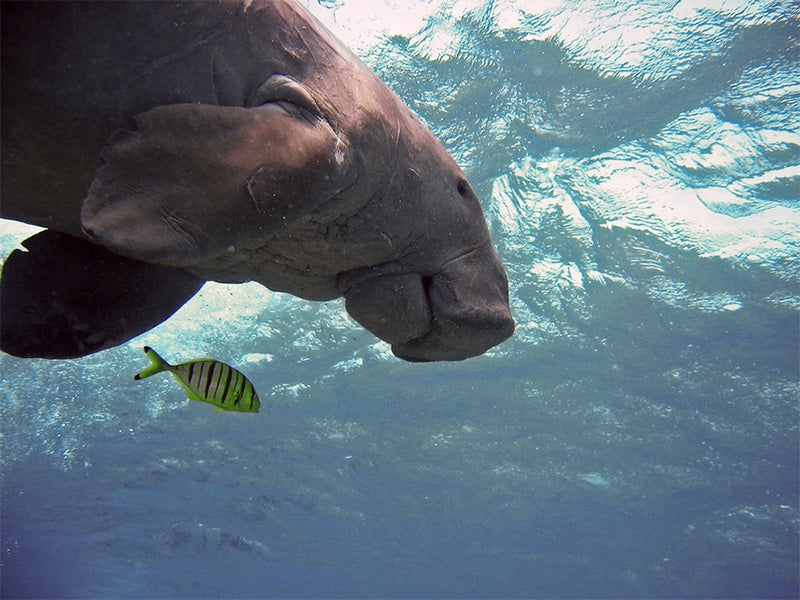
Photo of a dugong breaking the waves.
A dugong breaks the waves
Photo by Suehiro Nitta, courtesy Association to Protect Northernmost Dugong


Henoko Bay Reef and Proposed Site of Airbase:
(Click thumbnails for larger images)

Photo of Henoko Bay, proposed site of airbase, looking out over the coral reefs.
Henoko Bay, proposed site of airbase, looking out over the coral reefs
Photo by Jeff Shaw


Drilling Equipment and Previous Drilling at Henoko Bay:
(Click thumbnails for larger images)

 
Photo of drilling equipment at Henoko Bay, home of the dugong, in 1997.
Drilling equipment at Henoko Bay, home of the dugong, in 1997
 
Photo of drilling equipment at Henoko Bay, home of the dugong, in 1997.
Drilling equipment at Henoko Bay, home of the dugong, in 1997
 
Photo of drilling equipment at Henoko Bay, home of the dugong, in 1997.
Drilling equipment at Henoko Bay, home of the dugong, in 1997
 
Photo of boring equipment to be used during test drilling of the seabed for the new airbase.
Photo taken of boring equipment to be used during test drilling of the seabed for the new airbase.


Multimedia:

International Coral Reef Symposium, June 2004, Okinawa, Japan: Watch Peter Galvin from the Center for Biological Diversity discuss the plight of the Okinawan dugong. (Requires Quicktime) Broadband | Dial-up

Articles:

Stars and Stripse, September 21, 2007: Suit threatens Okinawa air station, Marines’ move to Guam

National Geographic, August 23, 2007: Rare Japanese Dugong Threatened by U.S. Military Base

Japan Focus January 5, 2007: Internationalizing the Okinawan Struggle

Stars and Stripes, July 26, 2005: Opponents of Futenma plan want court action to continue

Stars and Stripes, April 26, 2005: Base protesters mark one-year anniversary of Henoko sit-in

Stars and Stripes, March 3, 2005: Okinawa air station opponents cite environmental concerns

Stars and Stripes, December 10, 2004: Woman's fall interrupts environmental survey at Henoko site

Stars and Stripes, November 24, 2004: Seabed tests for new Marine station on Okinawa to resume

Stars and Stripes, August 23, 2004: Hearing has dugong supporter feeling optimistic

San Francisco Chronicle, August 5, 2004: Imperiled mammal threatened by plan for Okinawa base -- Court in S.F. hears activists advocate applying U.S. law

Stars and Stripes, July 8, 2004: Group says offshore base to replace Futenma would endanger coral reefs

Sierra Magazine, July/August 2004: In Marines' Way

Daily Journal, April 8, 2004: Historic Act May Keep Sea Creature from Being History