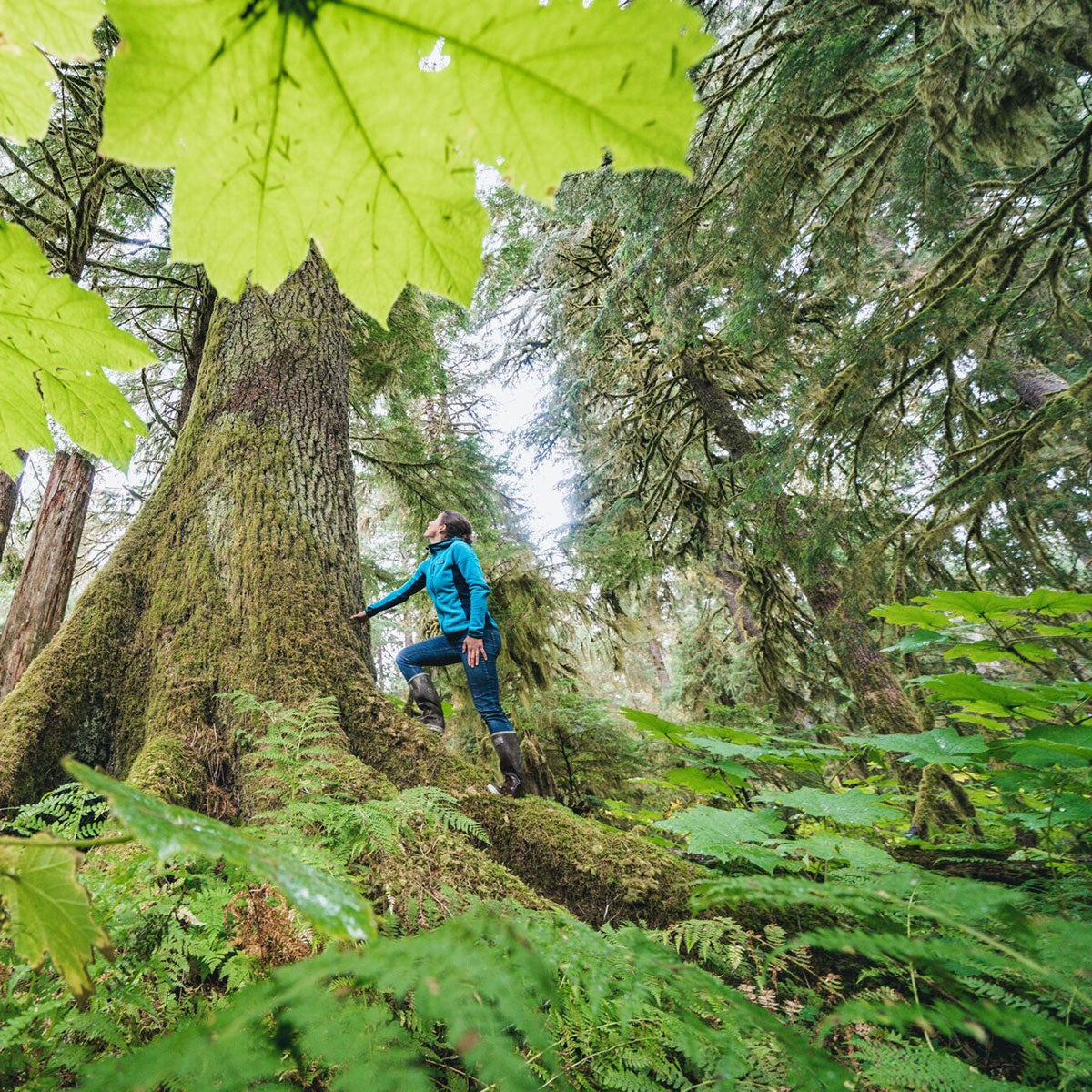

Acclaimed director and producer Ken Burns calls our national parks "America's Best Idea" in his new documentary series. As the nation that invented the concept more than 100 years ago, America presented the world with a revolutionary idea at the time: that a country's most treasured and scenic places belonged not to kings, nobles or the wealthy, but to ordinary people. More than a century later, this popular democratic concept has spread to almost every country in the world.
Earthjustice, as the nation's leading environmental law firm, plays a critical role in protecting these magnificent places. Learn more about our work by signing up for our newsletter and staying updated on our efforts to preserve "America's Best Idea" for generations to come.
Learn More, Act Now
-
1. Sequoia and Kings Canyon National Parks | Location: California
Est. 1890 / 1940
Size: +400,000 acres/ +460,000 acres
Sequoia and Kings Canyon National Parks capture the spectacular scenery of California's Sierra Nevada Range. Snow-capped mountains weave through the twin parks -- including Mount Whitney, which at 14,505 feet is the highest peak in the continental U.S. Equally impressive are the parks' ancient groves of Giant Sequoias, the largest trees on Earth. Read more |
-
2. Yellowstone National Park | Location: Wyoming, Montana, Idaho
Est. 1872
Size: +2.2 million acres
The world's oldest national park as well as one of its most visited, Yellowstone National Park is an American icon that still captures the imagination of visitors from around the globe who come to see its famous geysers, meadows, and free-roaming herds of bison, elk, grizzlies and wolves.
Read more |
-
3. Canyonlands National Park | Location: Utah
Est. 1964
Size: +337,000 acres
Embodying the gorgeous desert landscapes of the Southwest, Canyonlands National Park provides sweeping vistas of canyons, mesas, and buttes along the Colorado and Green Rivers. Once home to the ancestral Puebloan Indians, the park contains priceless arrays of ancient stone and mud dwellings as well as some of the oldest artifacts and murals in America.
Read more |
-
4. Everglades National Park | Location: Florida
Est. 1947
Size: +1.5 million acres
Encompassing just one-fifth of the historic Everglades region, Everglades National Park is a vast sea of wetlands, lakes, rivers, and subtropical forests teeming with wildlife. More than 1,000 different species of animals are found in the Everglades region-including its famous alligators and wading birds, as well as rare and endangered species like the gentle manatee and the elusive Florida panther.
Read more |
Earthjustice and National Parks: Case Studies
Use your mouse to hover over the map for more information, or click below.
Sequoia and Kings Canyon National Parks
Sequoia and Kings Canyon National Parks capture the spectacular scenery of California's Sierra Nevada Range. Snow-capped mountains weave through the twin parks -- including Mount Whitney, which at 14,505 feet is the highest peak in the continental U.S. Equally impressive are the parks' ancient groves of Giant Sequoias, the largest trees on Earth. Photo: Tom Hilton/Flickr
Read more » The views atop Moro Rock in Sequoia National Park can be breathtaking. A historic 797-foot stairway leads you up to the top of the granite dome where you have a 360 degree view of the park in all its scenic splendor. However, in recent decades the park has earned a less desirable reputation for being "breathless." Sequoia and adjacent Kings Canyon National Park have some of the worst air quality of all the national parks. Their proximity to California's Central Valley make them extremely vulnerable to the region's notorious smog. Forty percent of Jeffrey and Ponderosa pines in the park, for example, show clear signs of damage from smog, and visibility from Sequoia and Kings Canyon has been steadily declining for decades. The poor air quality also hurts the economy of local communities whose revenues take a hit from lower park attendance.
In a bid to clear up the air in Sequoia, Kings Canyon and other parks, Earthjustice has filed a number of lawsuits to ensure that states adopt Clean Air Act plans to restore air quality in our national parks. This includes limiting emissions from power plants and factories that still use outdated pollution controls, since emissions from these sources can travel hundreds of miles and obscure the scenic views in our national parks. Thanks to Earthjustice's legal pressure, plans for cleaning up haze in national parks in California and other western states are now due in January 2011. In addition, Earthjustice is now in court seeking stronger rules to protect trees in national parks from ozone damage. Hopefully, these steps will allow visitors to Sequoia and Kings Canyon to enjoy the splendid views we've come to expect from our national parks. Photo: Tom Hilton/Flickr
Yellowstone National Park
The world's oldest national park as well as one of its most visited, Yellowstone National Park is an American icon that still captures the imagination of visitors from around the globe who come to see its famous geysers, meadows, and free-roaming herds of bison, elk, grizzlies and wolves. Photo: Flicka/Wikipedia
Read more » Visitors to Yellowstone National Park during the winter are treated to a snow-covered wonderland of thermal geysers, wildlife, and great opportunities for cross-country skiing and snowshoeing. What they don't expect, however, are the legions of noisy polluting snowmobiles that descend on the park every winter. Snowmobiles foul the park's air with benzene and other noxious pollutants while disrupting Yellowstone's tranquility with a persistent mechanical drone. In addition to disturbing park visitors, snowmobiles also unnerve wildlife already stressed by the park's harsh winters.
Despite these negative impacts, the National Park Service under the Bush administration refused to adopt a plan that would have eliminated the use of snowmobiles in Yellowstone in favor of snow coaches, which are cleaner and more efficient. Earthjustice took the Park Service to court and in 2008, the judge ruled that the Park Service's actions violated its own obligation to conserve Yellowstone's natural wonders. The ruling is a breath of fresh air for winter park visitors, who should now be able to enjoy the clean air and tranquility of Yellowstone just as nature intended. Photo: © Mila Zinkova
Canyonlands National Park
Embodying the gorgeous desert landscapes of the Southwest, Canyonlands National Park provides sweeping vistas of canyons, mesas, and buttes along the Colorado and Green Rivers. Once home to the Ancestral Puebloan Indians, the park contains priceless arrays of ancient stone and mud dwellings as well as some of the oldest artifacts and murals in America. Photo: iStock
Read more » For the past decade, local counties in Utah have been vying to open up huge swaths of federally protected lands -- such as national parks -- to off-road vehicle use. Their tool: a little-known rule from the 1800s known as R.S.2477. The outdated law, which was repealed in the 1970s, gave counties the right to build highways over public lands. But some counties have taken the opportunity to claim almost anything as a "road" - from dry streambeds to old wagon tracks to cow paths. If they succeed, many areas in Utah's best preserved national parks and monuments would be damaged, including areas in beautiful Canyonlands National Park, where San Juan County, Utah is seeking to turn a desert stream, wildlife oasis, and an area rich in archeological artifacts into a county highway.
Earthjustice is locked in a multi-year legal battle with local counties in Utah and their industry supporters over this important issue. We scored important victories in 2008 and 2009 when court rulings made it clear that local counties can't rely on unproven highway claims to take over federal lands or ignore road closures meant to protect wildlife, water and wilderness. Although the dubious claims in Canyonlands and other national parks and monuments still remain, our progress so far represents an important first step towards preserving the great public lands of the West. Photo: indigoprime/Flickr
Everglades National Park
Encompassing just one-fifth of the historic Everglades region, Everglades National Park is a vast sea of wetlands, lakes, rivers, and subtropical forests teeming with wildlife. More than 1,000 different species of animals are found in the Everglades region-including its famous alligators and wading birds, as well as rare and endangered species like the gentle slow-moving manatee and the elusive Florida Panther. Photo: NPS
Read more » Water rules the Everglades. From the meandering creeks and streams that flow into the park's wetlands to the shallow estuaries, saltwater bays, and mangrove forests that dot its coastlines, water brings life to one of America's greatest wildlife habitats. But over the years, urban and agricultural runoff has polluted Lake Okeechobee and the greater Everglades region. The resulting nutrient-rich soup of chemicals can cause massive algal blooms that rob the water of oxygen, killing fish and other aquatic life. Moreover, the impacts to water quality are not just felt by wildlife-Lake Okeechobee, for example, is a drinking water source for local communities.
Earthjustice has long been a legal defender of water quality in the Everglades. For years, we have fought urban and agricultural pollution in the areas surrounding Lake Okeechobee and Everglades National Park, preventing pollutants from harming the park's natural integrity. Our work helped lay the foundation for the eventual historic proposal by Florida Governor Charlie Crist in 2008 to buy back land from the sugar industry to help restore the ecological balance of the Everglades. Recovery will take many years to come, but the efforts of groups like Earthjustice put the region back on the right track. Photo: J. Magnus/Flickr
|
|