Our Work

Our Cases

Issue
Region
 
Items 1 - 25 of 172  1234567Next

Colorado Oil and Gas Conservation Commission Rulemaking 06/05/09

The Colorado Oil and Gas Conservation Commission is promulgating regulations to implement statutory changes enacted from the 2007 legislative session. These new regulations are expected to substantially change the state permitting process for oil and gas development in Colorado. For the first time, the regulations will systemically address public health, environmental and wildlife concerns. 

Earthjustice has been asked to represent the conservation community in these proceedings, to make the case for regulations that are open and transparent and protective of the environment, and to counter an intense campaign by the oil and gas industry to weaken the proposed rules.

Gray Wolves in the Northern Rockies 06/05/09

Gray wolves have come perilously close to extinction in the Rocky Mountains. Only in the past decade has the wolf population rebounded from a population of less than 50 to more than 1,500 wolves today. Visitors come to Yellowstone every year to get the chance to see and hear wolves in the wild.

In September, 2008, the Bush administration moved to reinstate federal Endangered Species Act protections for wolves, by asking a federal court for permission to withdraw its March 2008 decision to drop protections for wolves in the northern Rockies. On March 6, 2009, Secretary of the Interior Ken Salazar affirmed the decision by the U.S. Fish and Wildlife Service to remove gray wolves from the list of threatened and endangered species in the western Great Lakes and the northern Rocky Mountain states of Idaho and Montana and parts of Washington, Oregon and Utah.

Once again, Earthjustice has turned to the courts to protect the grey wolves of the northen Rockies from attempts to deprive wolves of necessary legal and habitat protections. On June 2, 2009, Earthjustice filed suit on behalf of conservation groups challenging the decision to delist the wolves.

Air Pollution Haze in Our National Parks 05/05/09

The 1977 Clean Air Act set a national goal of cleaning up dirty air in major national parks and wilderness areas. Decades later, only a small handful of states have submitted legally required plans to comply. The result: power plant and factory emissions continue to obscure views of beloved landmarks in national parks across the country including Shenandoah, Great Smoky Mountains, Glacier, Big Bend, Acadia, Sequoia, and Yosemite.

On October 21, 2008, Earthjustice filed suit on behalf of Environmental Defense Fund and National Parks Conservation Association over the U.S. Environmental Protection Agency's failure to enforce deadlines for the states to adopt these clean air plans. The Clean Air Act required states to submit enforceable plans to EPA by last December to clean up hazy skies in parks and wilderness areas. As of June 2008, only six had submitted plans, according to EPA sources. The Earthjustice letter gave notice of intent to sue EPA unless the agency enforces the deadline against delinquent states within 60 days.

According to the National Park Service, human-caused air pollution reduces visibility in most national parks  throughout the country. Average visual range -- the farthest a person can see on a given day -- in most of the western United States is now about one-half to two-thirds of what it would be without man-made air pollution (about 140 miles). In most of the east, the average visual range is about one-fifth of what it would be under natural conditions (about 90 miles).

Earthjustice is suing EPA on behalf of conservation groups.


Protecting Grand Canyon-Parashant and Vermilion Cliffs National Monuments from Off-Road Vehicles 05/04/09

President Clinton created the Grand Canyon-Parashant and Vermilion Cliffs National Monuments in 2000 to protect their spectacular landscapes, unparalleled geological formations, artifacts from more than 10,000 years of human history, wildlife, and the solitude and remoteness essential to the character of these lands. To protect these valuable resources just north of the Grand Canyon, the Presidential Proclamations specifically prohibited the use of motorized vehicles off of any roads.

Instead of extending the National Monuments the especially protective management to which they are legally entitled, the U.S. Bureau of Land Management (BLM) adopted resource management plans (RMPs) that treat the monuments as if they are indistinguishable from general multiple-use BLM lands. This is perhaps most evident in BLM’s designation of a spider web of thousands of miles of trails and routes for motorized vehicles that BLM admits will damage the objects to be protected by the proclamations. 

In addition to failing to comply with the Monument Proclamations, BLM also relied on a settlement agreement between the Department of the Interior and State of Utah to unlawfully disavow its statutory authority to fully consider the protection of wilderness-quality lands in the monuments. As a result, the solitude, remoteness, and wildlife habitat so important to these lands may be degraded or destroyed by motor vehicle use and other activities permitted by BLM. 

Earthjustice represents a coalition of five environmental groups challenging the monuments’ RMPs.

Critical Habitat for the Palila 04/27/09

Palila in a mamane tree
The palila depends primarily on seeds from mamane trees for food.
Photo: USGS

The palila -- a bird endemic to Hawai'i -- depends on the native Hawaiian dry land forest, particularly mamane trees, for food, shelter, and breeding, and the destruction of mamane forests by sheep and goats and other browsing animals in the early twentieth century prompted a sharp decline in palila numbers and habitat. The U.S. Fish and Wildlife Service reacted by recognizing palila as endangered in 1967 and designating Palila critical habitat on the upper slopes of Mauna Kea.

Despite the known harm to native forests from browsing by sheep and goats, the State of Hawai`i continued to maintain feral goats and sheep for sport hunting within palila’s critical habitat and even stocked the forests with mouflon sheep, another destructive browser. In an historic opinion issued in 1979 and a second in 1987, the District Court for the District of Hawai`i held, in decisions upheld by the Ninth Circuit, that degradation of palila habitat constitutes unlawful harm to palila in violation of the Endangered Species Act. The court found the state was in violation of the ESA because the state maintained the destructive animals in the federally listed bird's last-remaining habitat, on which the palila depends for breeding, feeding, and sheltering, and ordered it to remove all sheep and goats completely and permanently. A third court order in 1998 affirmed the 1979 and 1987 orders and required the state to continue removing goats and sheep and to minimize the animals’ migration into the critical habitat, such as by constructing and maintaining a perimeter fence. 

Despite the three court orders, the state has failed to remove sheep and goats completely and permanently from the critical habitat and has yet to start construction on an adequate perimeter fence.  Earthjustice has returned to court seeking the state’s compliance with the court’s prior orders in order to protect this bird before it slides into extinction. 

Sea Level Timber Sale 04/22/09

The Sea Level timber sale would clearcut the heart of the last major roadless watershed in Thorne Arm, on Revillagigedo Island near Ketchikan in the Tongass National Forest. The watershed provides important old-growth habitat connecting Misty Fjords National Monument with the valuable coastal habitat along Thorne Arm. 

The Forest Service is proceeding with the timber sale on the basis of a ten-year old environmental impact statement. In the past decade, prices for Tongass timber have plummeted while the costs have skyrocketed. At the same time, significant new information and research over the last decade related to deer and wolves, yellow cedar decline and climate change, endemic species, and invasive species shows the impacts of the timber sale may be more significant than the Forest Service previously anticipated. The Forest Service has refused to consider this information and is proceeding to offer the timber sale anyway.

In March 2009, Earthjustice asked the court to put a halt to the timber sale and road construction until the Forest Service takes the new information into account.

Gulf Longlines & Sea Turtles 04/15/09

Earthjustice has filed suit to protect sea turtles in the Gulf of Mexico. These turtles are a key part of the ecosystem in the Gulf, where they forage and live throughout the year. They also are a valuable legacy for Gulf residents who take pride in observing and enjoying the sea turtles' continued choice of their local beaches to nest. But they are being captured and killed in large numbers by fishing vessels that deploy miles of line and thousands of hooks along the ocean floor. The turtles drown or suffer serious injury when they grab the bait off these hooks.

Populations of these sea turtles are vulnerable; one turtle species in particular -- the loggerhea -- has suffered more than a 40% decline in its population over the past decade. Therefore, the Endangered Species Act requires the National Marine Fisheries Service to strictly limit the number of turtles that can be caught and harmed by these fishing vessels. But the Service has known for several years that these turtles are being caught by the hundreds, at levels that greatly exceed the allowed limit. The situation is so dire that in January 2009 the local fishery management council asked the Service to close the fishery altogether. Even though the scientific data are clear, and despite the fact that the Service has both the authority and duty to prevent further death and injury to sea turtles, the Service still has failed to act.

In its lawsuit, Earthjustice is asking the federal court in Florida to order the Service to close the fishery until the Service gathers the information needed to assess how best to protect the turtles and avoid further decimating their populations.

Challenging Smoky Canyon Mine Expansion Permit 04/13/09

This case challenges a permit allowing expansion of the Smoky Canyon phosphate mine into roadless areas of the Caribou-Targhee National Forest in southeast Idaho. The mine is already listed as a federal Superfund site due to toxic pollution of area waters from past mining activity. Expanding the mine will likely create additional pollution in southeast Idaho springs and streams.

The mine expansion would enlarge the existing mine's footprint of into more than 1,100 acres of pristine roadless forests. 

The mine requires digging up massive amounts of selenium-bearing rock to access the phosphate ore. Selenium is a mineral that can cause deformities and death to animals and is a known threat to humans. Selenium pollution has killed trout, livestock and untold wildlife since first being documented in southeast Idaho more than two decades ago.

In June 2008 the Bush administration authorized expansion of the mine even though Forest Service and the federal Bureau of Land Management scientists questioned the science and the proposed practices in the expansion plan

Protecting Hawai'i's False Killer Whales 03/17/09

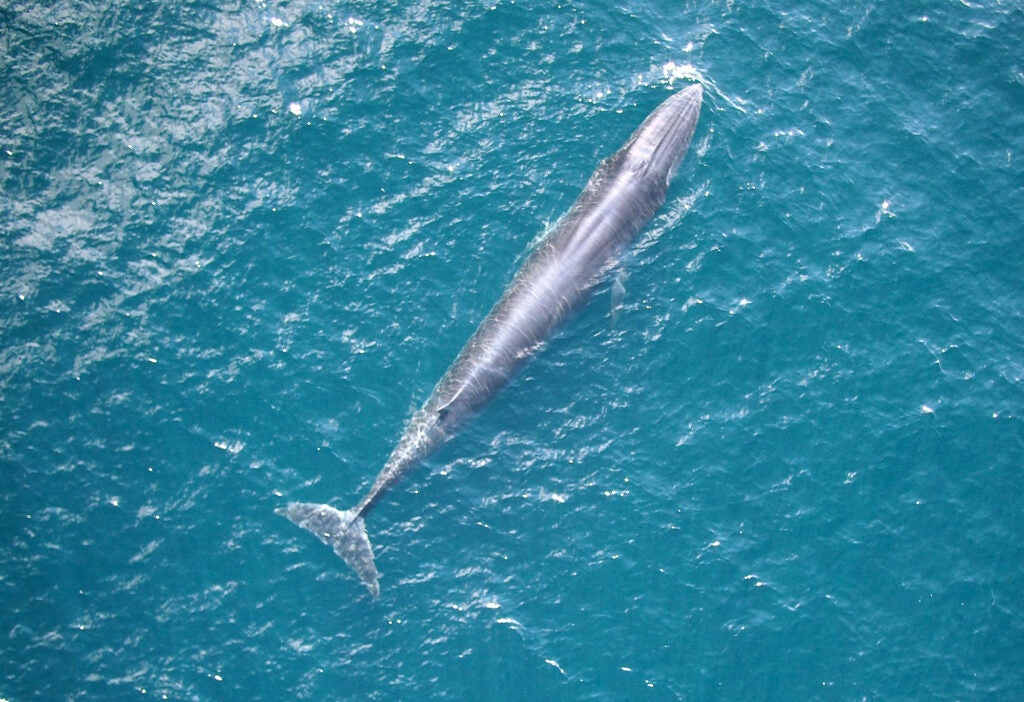
For years, the National Marine Fisheries Service has illegally ignored its own data, which show the Hawai‘i-based longline fleet currently is injuring and killing false killer whales at over twice the level the population can sustain. In 2004, under pressure from an Earthjustice lawsuit, the National Marine Fisheries Service finally re-classified the Hawai‘i-based longline fishery as "Category I" -- a designation for fisheries that anually kill and seriously harm marine mamamla at unstainable rates -- due to its excessive incidental take of Hawai'i's false killer whales.  Pursuant to the Marine Mammal Protection Act, this recategorization should have triggered the prompt establishment of a take reduction team to devise a plan to bring the fishery's incidental take  "to insignificant levels approaching a zero mortality and serious injury rate."  NMFS has failed to do so, claiming inadequate funding. At the same time, NMFS has neither sought additional funding nor applied the congressionally-mandated factors to allocate resources where insufficient funding is available for all required take reduction actions.

Hawai‘i’s marine mammals are paying with their lives for NMFS’s refusal to comply with the law.  Earthjustice is suing NMFS to compel it to heed Congress’s command to protect Hawai‘i’s false killer whales from needless death and injury. 

TMDL Challenge: Lake Okeechobee Tributaries 03/09/09

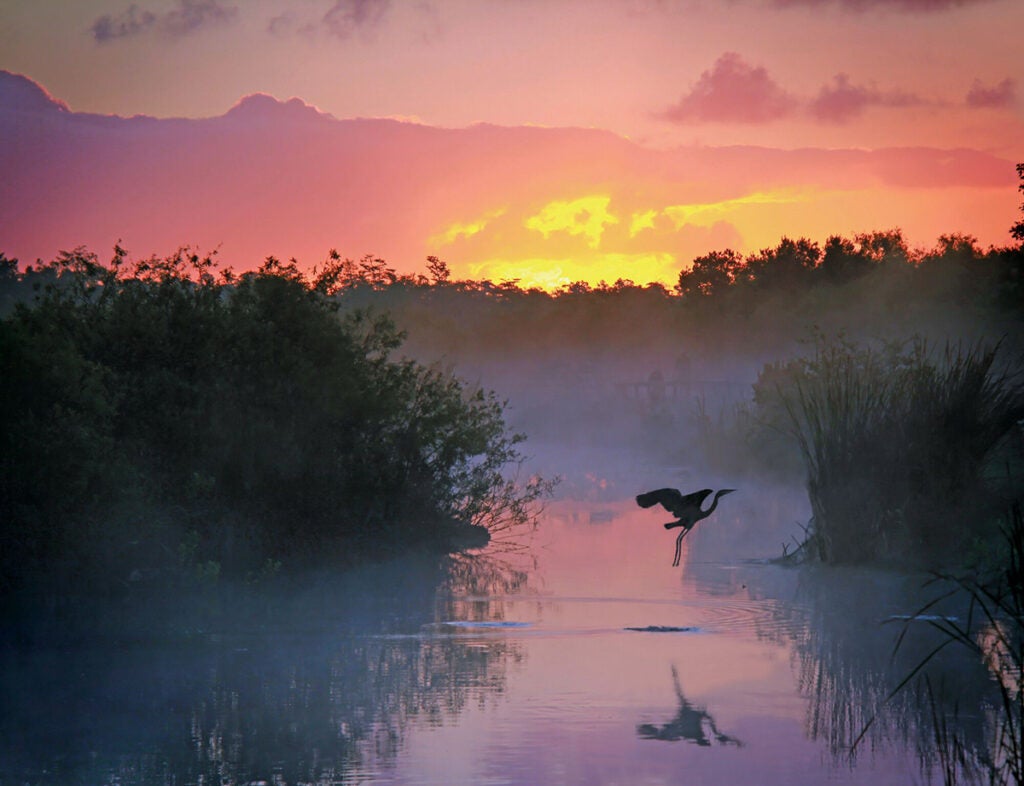
Apart from its ecological significance as the second largest lake in the United States, Lake Okeechobee is also the largest surface water drinking source in Florida and the headwaters to the Everglades. Today, as a consequence of constantly accumulating phosphorus and nitrogen pollution, Lake Okeechobee periodically develops extensive toxic algae blooms. This case follows a successful Florida law challenge to a nutrient limit proposed for the nine northern tributaries to Lake Okeechobee. In that case, the state agency proposed a nutrient limit for the tributaries far too high to maintain the federal and state standards for water quality. The evidence in that case indicated a much lower limit would be appropriate. In response to this decision, the Environmental Protection Agency (EPA) proposed such a limit. Major agricultural polluters then put pressure on EPA to sharply increase the phosphorus limit, and the state developed an elaborate formula which produced a nutrient limit for the tributaries at a level 70 percent higher than the level initially proposed by EPA. In mid-summer 2008, EPA finalized its rule and adopted the higher concentration limit for phosphorus. An unreasonably high phosphorus limit for the main tributaries to the lake will serve as a vehicle to legalize the pollution rather than bring it under control.

Earthjustice is suing on behalf of conservationists to compel the EPA to set more protective pollution limits.

Anacostia River: Sediment Pollution Limits 02/25/09

The Anacostia River flows through Maryland and the District of Columbia. Even though it flows through our nation's capital, it is heavily polluted -- raw sewage, trash, and other contaminents flow into the river, especially after heavy rains. Erosion, runoff from grimy streets, and an antiquated sewer system contribute to the problem.

The Clean Water Act requires that each state and the District of Columbia must set water quality standards which would protect the public health or welfare and enhance the quality of water. The state or  the EPA must then set limits on the amount of pollutants that can enter a specific waterbody in any given day (total maximum daily loads, or TMDLs), and the EPA must approve TMDLs only if they are adequate to achieve the state's water quality standards. Because contaminated sediment is one of the major causes of water quality impairment in the Anacostia, the District and Maryland must set TMDLs to limit sediment pollution along with other pollutants classified as "suspended solids."

In response to a previous Earthjustice lawsuit, the District of Columbia and Maryland adopted a daily cap for suspended solids in the Anacostia, but these caps are far too high to make the river suitable for recreation or even aesthestic enjoyment. Earthjustice is challenging the EPA's adoption of these inadequate pollution caps. The Anacostia River deserves better.

Cleaning Product Chemical Reporting 02/17/09

Earthjustice is taking Proctor & Gamble, Colgate-Palmolive, and other household cleaner manufacturing giants to court for refusing to follow a New York state law requiring them to disclose the chemical ingredients in their products and the health risks they pose.
 
The first-of-its-kind case could have national implications. Independent studies into chemicals contained in cleaning products continue to find health effects ranging from nerve damage to hormone disruption. But ingredient disclosure requirements are virtually non-existent in the United States.
 
The exception is this long-forgotten New York state law which requires household cleaner companies selling their products in New York to file semi-annual reports with the state listing the chemicals contained in their products and describing any company research on these chemicals' health and environmental effects.
 
But in the three decades since the 1976 law was passed, companies failed to file a single report. In the fall of 2008, Earthjustice sent letters to more than a dozen companies asking them to comply with the law. The companies targeted in this lawsuit -- Proctor & Gamble, Colgate-Palmolive, Church and Dwight and Reckitt-Benckiser -- each ignored or refused this request.

Marine Diesel Emissions 02/11/09

The EPA has failed to produce meaningful standards for controlling emissions from Category 3 marine diesel engines -- engines that power the largest oceangoing vessels such as tankers, freighters and cruise ships -- as required by the Clean Air Act. These marine engines burn residual fuel oil which contains sulfur, nitrogen, ash, and other substances that turn into sulfur oxide, nitrous oxide, and other pollutants and greenhouse gases when burned. Typical of shipping practices across the country, the ships steam into ports -- sometimes for days awaiting their turn to dock -- all the while running their engines to generate electricity to operate various ship systems (a practice called "hotelling"). People who live near ports are exposed to higher levels of diesel particulate matter and other pollutants, and suffer higher rates of asthma and cardiovascular disease.

Earthjustice sued EPA to compel the agency to set meaningful emissions standards for this significant source of air pollution.  EPA has committed to issuing regulations by December 17, 2009.  

Idaho Roadless Rule 01/28/09

Late in the Bush administration, the U.S. Forest Service issued the Idaho Roadless Rule, a regulation establishing special rules to govern management of undeveloped roadless areas in Idaho's National Forests. Idaho has the most roadless public forest lands of any state in the lower-48 United States, with more than nine million acres. These pristine lands belong to all Americans. They provide outstanding opportunities for hunting, fishing and hiking, as well as essential habitat for rare wildlife species such as grizzly bears, gray wolves, caribou, and wolverines. However, while the 2001 Roadless Rule protected these lands, the Bush administration's Idaho Roadless Rule creates new loopholes that open the door for road construction and logging across 5.3 million acres of roadless areas -- an area more than twice the size of Yellowstone National Park -- and leaves more than 400,000 acres of roadless areas entirely unprotected.

Representing a coalition of national and regional conservation groups, Earthjustice challenged the Idaho Roadless Rule in federal district court in January 2009. This lawsuit takes aim at the rule's impacts on endangered and threatened species and its authorization for new development activities in previously protected roadless areas. Earthjustice will ask the court to invalidate the Idaho Roadless Rule and restore the 2001 Roadless Rule's protections for Idaho's irreplaceable wild forests.

Subsidizing Oil Shale Industrial Development in the West 01/26/09

Earthjustice, on behalf of 13 conservation groups, filed two lawsuits in federal court in Colorado on January 16, 2009, challenging last-minute efforts by the Bush administration to subsidize oil shale industrial development across wildlands in Colorado, Wyoming, and Utah.

The first suit challenges the Bush administration's decision to give the green light to oil shale leasing across two million acres of public lands. The suit challenges the Bureau of Land Management's decision to cut the public out of the decisionmaking process by failure to permit the public to challenge the action in an administrative "protest" before finalizing the decision. Conservation groups also charge that the BLM failed to even consider protecting wildlands and habitat for the imperiled sage grouse while permitting some leasing to go ahead.

The second suit challenges the Bush administration's decision to issue new rules for managing oil shale. These rules provide huge subsidies to those hoping to start a domestic oil shale industry by cutting the rate US taxpayers will get from the sale of oil shale to less than 1/2 what it is for conventional oil and gas. The groups charge this violates the law's requirement that taxpayers get a fair return for the shale removed from America's public lands. The groups also challenge the agency's failure to divulge the environmental impact of subsidizing the industry.

Western Oregon Plan Revision 01/26/09

Precipitated by litigation in the 1980s-1990s, the Northwest Forest Plan has governed federal public forests in Washington, Oregon, and northern California since its adoption in 1994, but its protections were under attack throughout the Bush administration. The last shoe to drop in the attempt to dismantle the Northwest Forest Plan was its wholesale revision with respect to 2.6 million acres of Bureau of Land Management (“BLM”) lands in Oregon. The Western Oregon Plan Revisions, known by the acronym WOPR, will quadruple old-growth forest logging and eliminate or substantially shrink all wildlife reserves, including the streamside buffers and key watersheds that are integral parts of the Northwest Forest Plan’s salmon and clean water protections. While WOPR covers Oregon, its impact is region-wide, as it marks the end of the ecosystem-wide strategy that has protected northwest rivers, salmon and steelhead, northern spotted owls, marbled murrelets, and other old-growth dependent species.

In early January 2009, Earthjustice filed a lawsuit on behalf of thirteen conservation and fishing groups challenging BLM for its failure to use the best science, its failure to disclose environmental impacts, and its flouting of the consultation “look before you leap” requirements of the Endangered Species Act.

Snowmobiles in Yellowstone National Park 12/31/08

For eight years, the Bush administration has worked to reverse the National Park Service's 2001 decision to eliminate recreational snowmobiling -- and its adverse air, noise, and wildlife impacts -- from Yellowstone, the nation's first national park.  In 2003, Earthjustice attorneys succeeded in overturning in court the Bush administration's first Yellowstone snowmobile plan, under which 950 snowmobiles would have been allowed into the park each winter day.  In 2007, the Bush administration finalized a second plan authorizing 540 snowmobiles in Yellowstone each winter day -- twice the number of recent winter seasons, during which the Park Service's own noise and air quality thresholds were violated by snowmobiles. The Bush administration's plan to double the number of snowmobiles within Yellowstone contradicted the recommendation of Park Service's own biologists, who had concluded that lower vehicle numbers were necessary to protect the park's winter-stressed wildlife.

On September 15, 2008, a federal court in Washington, D.C., rejected the Bush administration's 540-snowmobile plan in a second Earthjustice lawsuit, reaffirming that "the fundamental purpose of the national park system is to conserve park resources and values." In the words of the court, the administration's decision to allow a doubling of snowmobile use within Yellowstone "clearly elevate[d] use over conservation of park resources and values" contrary to Park Service mandates. The court set aside the Bush administration's plan and directed the Park Service to develop a new regulation protective of Yellowstone National Park.

The Bush administration refused. Citing a November 2008 Wyoming court decision that left the Park Service with the authority to develop a new winter use plan, in December 2008 the Bush administration published a regulation that will allow 720 snowmobiles into the park each winter day -- 180 more than the plan invalidated only three months before by the Washington, D.C., court. Earthjustice has filed a lawsuit on behalf of five conservation groups challenging the Bush administration's eleventh-hour effort to perpetuate recreational snowmobiling within Yellowstone National Park. 

Graham's Penstemon: Wildflower on the Brink 12/30/08

The Graham's penstemon is a beautiful wildflower that lives exclusively on oil shale in the Unita Basin of northeastern Utah and northwestern Colorado. The penstemon is uniquely adapted to live in this harsh, dry climate. Future development of oil and gas and oil shale threatens the very existence of this flower.

In 2006, the Fish & Wildlife Service proposed that the Graham's penstemon be inclused on the endangered species list. But in 2007, the FWS reversed its decision, despite scientific evidence that this wildflower is threatened.

Earthjustice is suing on behalf of conservationists.

Stronger Standards to Reduce Mercury and Other Pollutants from Power Plants 12/30/08

Photo of a smokestack belching pollution

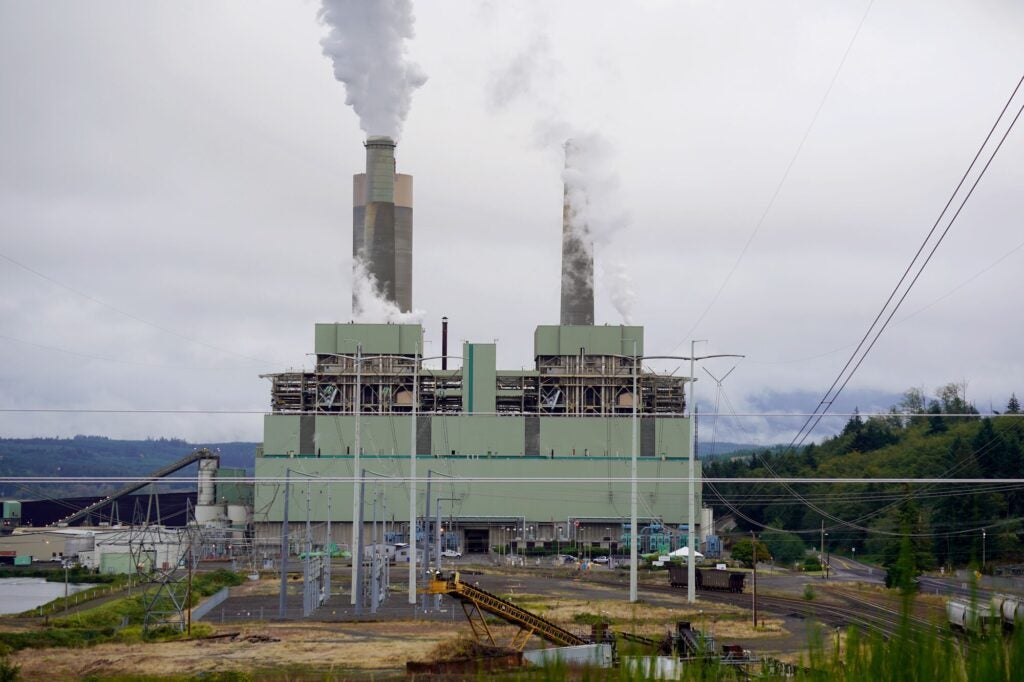
Power plants are, collectively, the worst toxic emitters in the country.  They emit more than 350,000 tons of toxic chemicals each year, including more than forty percent of all mercury emissions (approximately forty-eight tons per year), twenty percent of all arsenic emissions (approximately seventy tons per year) as well as more than eighty tons per year of both lead and chromium. In Earthjustice's previous power plants air toxics case, we successfully challenged EPA's decision to remove power plants from the list of industries for which air toxics standards are required -- a move that would have allowed the agency to delay and curtail reductions in power plants' mercury emissions and leave their emissions of arsenic, lead and other hazardous air pollutants wholly unregulated.

Because power plants remain on the list for which air toxics standards are required, EPA is subject to a mandatory Clean Air Act deadline for issuing such standards. In fact, a section of the Clean Air Act required EPA to issue standards within two years of the date it placed power plants on the list, December 20, 2000.  EPA's power plants standards were due no later than December 20, 2002. To date, EPA has not complied with the law.

Earthjustice is suing on behalf of conservation groups to force EPA to set strong standards for power plants which would require deep reductions in mercury and  other toxic air pollutants by a firm and enforceable deadline.

Protecting the Endangered Species Act from Last-Minute Rule Changes 12/22/08

Photo of Steller sea lions
Steller sea lions
Photo by Joel Sartore

In a last-ditch attempt to weaken the Endangered Species Act, the U.S. Fish and Wildlife Service and National Marine Fisheries Service have enacted a rule that drastically reduces one of the core protections of the Act.

The Endangered Species Act requires all federal agencies to consult with expert federal wildlife agencies to ensure that their actions will not harm endangered species and, when necessary, to develop project alternatives that will mitigate any possible harm to endangered species. Consultation has been the Act's most effective and successful safeguard by, for example, keeping factory trawlers out of Steller sea lion rookeries, establishing minimum flows for salmon in the Klamath River, and reforming management of the Northwest forests to protect the northern spotted owl and other old-growth dependent species.

The new rule eliminates the consultation requirement in a wide range of circumstances and will reduce protections for imperiled species. The new rule was enacted on December 16, 2008, and is scheduled to take effect on January 15, 2009, in the final days of the Bush administration's term in office. Earthjustice has filed a lawsuit challenging the new rule in a federal district court in California. Earthjustice is asking the court to find the rule unlawful and set it aside to restore the critical protections endangered species need to survive.

Keeping Lake Tahoe Blue 12/19/08

Lake Tahoe
Lake Tahoe
Photo: Nevada Division of State Parks

Situated between Nevada and California, near the crest of the Sierra Mountains, Lake Tahoe is one of the deepest and clearest lakes in the world, and only one of two EPA-designated "Outstanding National Resources Waters" in the western Untied States. Due to increasing human activities and urban development around the lake, however, its famed clarity, which once measured 100 feet deep, has declined 30% since 1968. Further, 75% of the region's environmental standards, including water quality and air quality standards, have not been achieved. The Tahoe Regional Planning Agency's new plan to allow the construction of 138 piers and the placement of several thousand buoys in Lake Tahoe's shorezone would only cause more harm to the Lake's fragile environment. These additional shorezone structures would impede the public's recreational access to the shorezone, degrade the lake's natural scenic beauty, and result in over 62,000 additional motorized boat trips on the lake per year, leading to more pollution of the lake's waters and further declines in lake clarity.

This lawsuit challenges TRPA's plan to dramatically increase shorezone development, in violation of the agency's mandate to protect and restore Lake Tahoe's natural beauty and health.

The agency also failed to perform adequate environmental studies of the new development, and relied on an unformulated and undefined "Blue Boating Program" to offset the increased pollution. Without further specifics, however, the Blue Boating Program cannot assure that the lake's clarity will not suffer further damage and that environmental standards will be met. This lawsuit seeks to stop additional shorezone development until TRPA can show that its plan will achieve the region's standards.

Earthjustice is suing on behalf of conservationists

Stronger Standards for PVC Plants 10/31/08

Each year, PVC (or polyvinyl chloride) plants are responsible for pumping approximately 500,000 pounds of vinyl chloride -- a known human carcinogen -- and many other toxic chemicals into the atmosphere. These plants have had incredibly damaging effects on communities throughout the country, especially in Louisiana. In Mossville, Louisiana, a historically African American community that is home to two PVC plants, health studies have found blood levels of dioxin among residents rivaling those seen in industrial accidents. Communities like Mossville that exist in the shadow of PVC plants suffer from high rates of cancer, asthma, and endometriosis. 

Although EPA issued emissions regulations for PVC plants in 2002, they provided emission standards for just vinyl chloride, leaving emissions of dioxins, chromium, lead, chlorine and hydrogen choride -- substances associated with a wide variety of serious adverse health effects including cancer -- entirely unchecked.  Further, the sole standard adopted, for vinyl chloride, was set at the same weak standard that has been in place since 1976, a level that allows PVC plants to continue emitting this toxin at levels that EPA itself expects to cause death and serious illness.

Mossville Environmental Action Now (MEAN) and the Sierra Club, represented by Earthjustice, successfully challenged those regulations in 2002, resulting in a 2004 decision by the DC Circuit Court of Appeals finding that EPA's lax approach to regulating pollution from PVC plants violated the law.  Four years later, the agency has failed to make any progress in replacing the vacated standard with a lawful one, leaving PVC plants underregulated.

In October 2008, Earthjustice again filed suit on behalf of MEAN, the Sierra Club, and Louisiana Environmental Action Network (LEAN) to force EPA to comply with their obligations under the Clean Air Act and issue lawful standards for PVC plants. Earthjustice is asking the District Court for the District of Columbia to issue an enforceable deadline for EPA's issuance of those standards. 

Protecting Wolverines in the Lower-48 10/21/08

Photo of wolverine
Wolverine
Photo by US Fish & Wildlife Service

The wolverine, the largest terrestrial member of the weasel family, is among the rarest mammals in the lower-48 states and faces severe threats from habitat fragmentation and disturbance, trapping, and global warming. Nevertheless, the U.S. Fish and Wildlife Service in March 2008 rejected a petition to protect the wolverine under the Endangered Species Act. In so doing, the FWS cited the presence of wolverines in Canada and Alaska as a justification for refusing to protect the last remaining wolverines in the lower-48 states. This approach by FWS represented a stark departure from past Endangered Species Act listings of such species as the grizzly bear, the wolf, and the bald eagle in the lower-48 states despite the persistence of these species in Canada and Alaska.

Earthjustice, representing nine conservation groups, sued FWS in September 2008 to ensure that the wolverine is protected in the lower-48 states as Congress intended.

Monitoring the Health of the Sierra Nevada 09/09/08

The 1982 National Forest Management Act regulations require the Forest Service to identify and monitor the populations of various management indicator species (“MIS”) in the national forests. These particular species serve as a bellwether for other species with the same special habitat needs or population characteristics, so monitoring MIS is a way of monitoring the health of forest wildlife and habitat more generally. 

On December 14, 2007, the Forest Service amended the forest plans for all ten national forests in the Sierra Nevada. The amendment reduces significantly the number of MIS that will be monitored, increasing the risk that logging and other destructive activities will be carried out that will harm wildlife and habitat in the Sierra.

This suit challenges this amendment to the Sierra Nevada forest plans. 

Protecting Global Climate and Community Health from Oil Refinery Impacts 09/04/08

This case challenges the City of Richmond's approval of a major project at the Chevron oil refinery. The project could allow the refinery to use dirtier forms of oil which could increase the release of highly-polluting mercury, selenium and sulfur flare gas. In addition, greenhouse gas emissions from the refinery could increase by nearly 900,000 tons per year. The project could also increase the risk of accidents at the refinery, which in the past have led to considerable acute health problems in the surrounding community. The City is responsible for making sure that the Environmental Impact Report for the project analyzes and mitigates all of its significant environmental impacts, and violated the California Environmental Quality Act by approving a flawed report. 

Earthjustice is suing on behalf of environmental justice and community groups.