

De-Sliming Florida’s Waterways
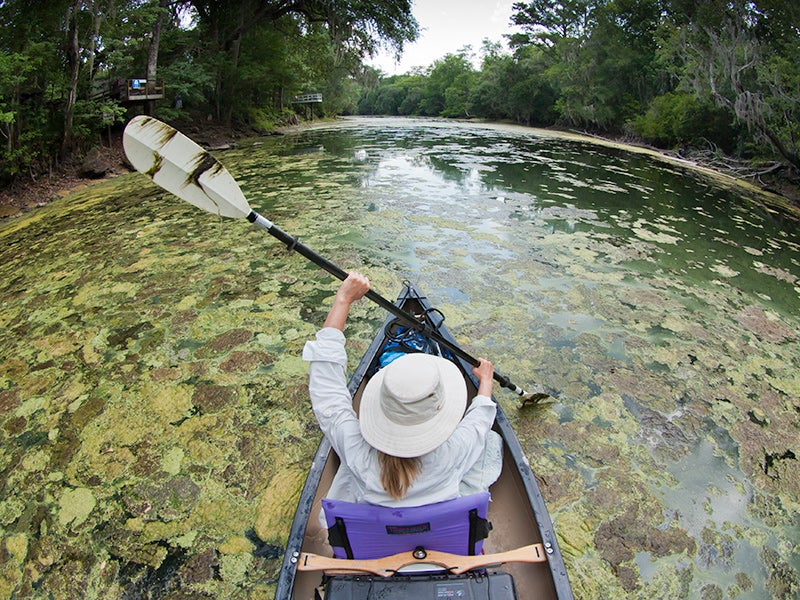
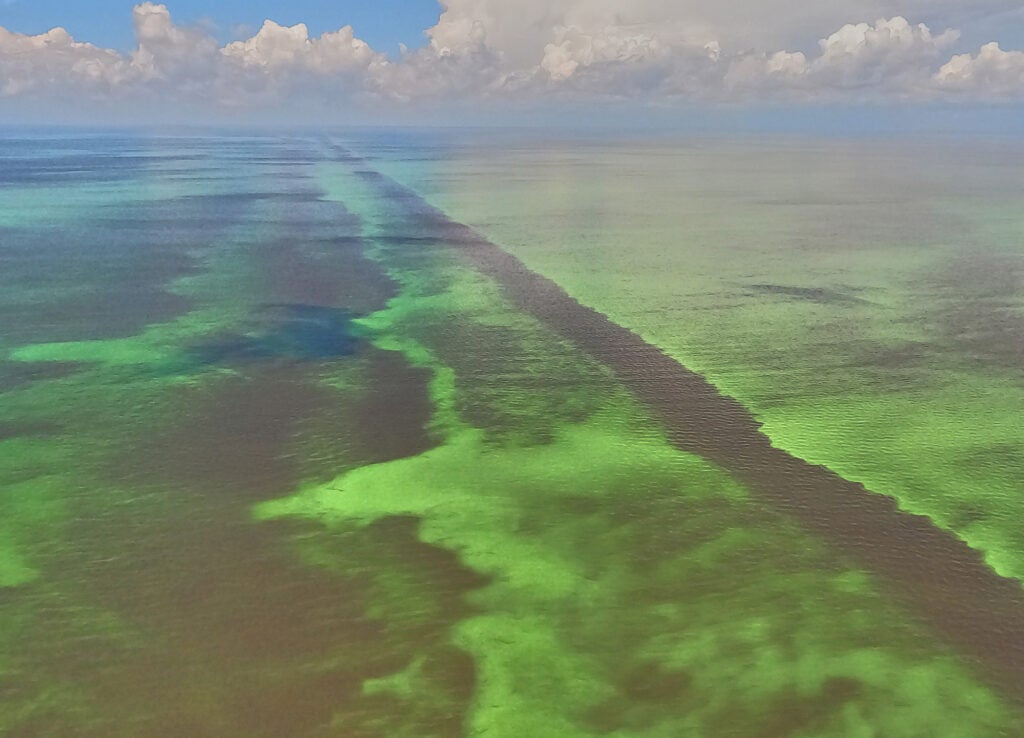
Florida waterways are choked by toxic green slime, thanks to sewage, fertilizer and animal waste runoff. Earthjustice is seeking protections under the Clean Water Act to clean up the dangerous mess that is tarnishing one of the nation’s greatest water states.
Case Overview
Florida is a water state, known for its rivers, creeks, mangrove swamps and wetlands. But what was once pristine has become sullied by fluorescent green slime—the toxic result of sewage, manure and fertilizer pollution, which triggers outbreaks of algae. As a result, health officials continually warn Floridians and tourists not to come into contact with the algae-choked water.
The Clean Water Act is intended to protect people against exactly this kind of preventable pollution. In 2008, Earthjustice sued the EPA to force the agency to set standards to protect Florida’s waters from outbreaks of toxic slime.
In 2009, the EPA agreed as part of a settlement to set enforceable, legal limits on the pollution that generates toxic slime in Florida’s waterways. The agency set limits, but the state of Florida issued its own weaker limits in an attempt to displace the federal rules. Earthjustice challenged these limits, but a Florida judge sided with industry.
Now, the EPA is considering ceding control over much of Floridian waters to the state and its toothless, industry-created pollution plan. Earthjustice is challenging the EPA in an attempt to ensure that federal, enforceable standards are put in place to protect Floridians and their precious water resources.
Case Updates
Case page created on July 17, 2008.