Black Carbon
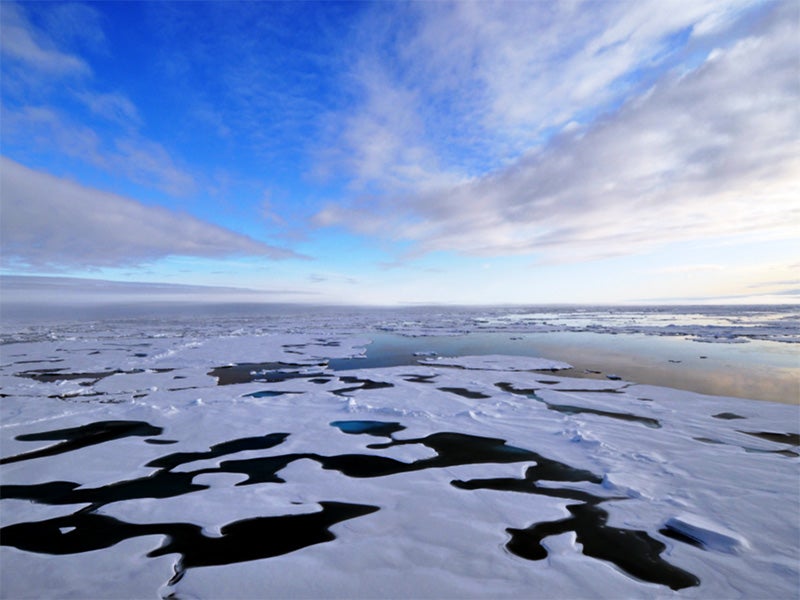
Recent evidence provides hope that fast action to reduce soot emissions can slow global and Arctic warming quickly enough to avoid catastrophic tipping points such as the melting of sea ice and the Greenland ice sheet.
Earthjustice is working nationally and internationally for stricter standards and promote the transfer of clean technologies to reduce these "black carbon" emissions.
Technology exists now to reduce emissions of this toxic global warming pollutant. Fast action is also essential to protect health as soot is a leading cause of mortality from air pollution.
Jump to: Earthjustice Action | Recent News Reports | Scientists' Testimonies | Proposed U.S. Legislation | Science Articles
Earthjustice Action on Black Carbon
Stopsoot.org features a two minute animated video on black carbon's effects and an action alert to U.S. decision makers.
Black Carbon, Glaciers & Sea Level Rise: Earthjustice & Australia Climate Justice Program Petition UNESCO's World Heritage Committee
Earthjustice Comments to EPA on Black Carbon and Proposed Rule Making
Earthjustice Petition to EPA on Air Pollution from Ships
Recent News and Policy Reports on Black Carbon and its Climate Effects
Soot Clouds Pose Threat To Himalayan Glaciers Randeep Ramesh and Suzanne Goldberg, Guardian UK, October 4, 2009
United Nations Environment Programme, (2009) Black Carbon e-Bulletin Part I, September 2009.
The Full Climate Change Tale Jessica Seddon Wallack, LiveMint.com/Wall St. Journal, September 23, 2009
Climate Change Campaigners Should Not Have Fixated on CO2 Geoffrey Lean, Telegraph UK, September 18, 2009
CO2 Is Not The Only Cause of Climate Change Achim Steiner, Guardian UK, September 11, 2009
Climate Change-- UNEP Points to Accelerated Opportunities for Action UNEP, September 4, 2009
No Safe Harbor: The Shipping Industry's Pollution Problem (Part I: Low Hanging Fruit; Part II: A Lack of Authority; Part III: Off the Hook) Adam Sarvana, DC Bureau, August 31 - September 3, 2009
Quick Fix to Slow Global Warming? Margaret Lowman, Sarasota Herald-Tribune, August 17, 2009
An Analysis of Black Carbon Mitigation as a Response to Climate Change David Montgomery et al., A Perspective on Black Carbon Mitigation as a Response to Climate Change, Copenhagen Consensus Center, August 14, 2009
A Perspective Paper on Black Carbon Mitigation as a Response to Climate Change Milind Kandlikar et al., Copenhagen Consensus Center, August 14, 2009
Black Carbon: A Review and Policy Recommendations Karen Bice et al., Princeton University Woodrow Wilson School of Public and International Affairs, 2009
Soot, methane and forests: The cheapest ways of addressing climate change? Kate MacKenzie, FT Energysource, August 14, 2009
Saving Fuel But Melting Ice Faster John Perlin, Miller-McCune, August 7, 2009
Can Roadway Design Air Quality Impacts Richard Baldauf et al, August 4, 2009
Black Carbon E-Bulletin UNEP, July 2009
Black Carbon and Global Warming: A Promising Short-term Approach? Zeke Hausfather, Yale Forum on Climate Change, July 9, 2009
Climate's Smoky Spectre Jeff Tollefson, Nature, July 2, 2009
Limiting Black Soot and Ozone -- Buying Time against Climate Change Michael Ricciardi, In Global, May 30, 2009
Asian Emissions Soar Kate Ravilious, environmentalresearchweb, May 1, 2009
US climate change denier James Inhofe joins Al Gore in fight against soot Suzanne Goldenberg, Guardian UK, May 5, 2009 (with quote from Earthjustice attorney Erika Rosenthal)
Arctic Nations Order Investigation of Black Carbon, Blamed for Significant Ice Melt Laura Shin, Solve Climate, April 29, 2009
Cookstoves, Carbon, and Climate Jeremy Carl, Indian Express, April 28, 2009
Senate Foes Agree on Dangerous Pollutant Andrew Revkin, New York Times, April 22, 2009
New Push Focuses on Quick Ways to Curb Global Warming Eli Kintisch, Science, April 17, 2009
Third-World Stove Soot Is Target in Climate Fight Elizabeth Rosenthal, New York Times, April 16, 2009 (with quote from Earthjustice attorney Erika Rosenthal)
Tackling Soot Could Reduce Arctic Ice Melt Fiona Harvey, FT Energysource , April 8, 2009
Black Carbon an Easy Target for Climate Change John Lash, Policy Innovations, February 9, 2009
Soot reduction 'could help to stop global warming' Geoffrey Lean, The Independent, UK, January 4, 2009
Plumes of Arctic Haze Traced to Russia, Kazakhstan Sid Perkins, Science News, February 13, 2009
Prescription for Arctic Melting: Clear the Air Down South Elizabeth Grossman, Scientific American, January 29, 2009
Study Gets Inside the World's "Brown Cloud" Deena Guzderg, Time, Friday, Jan. 23, 2009
Dirty Snow Causes Early Runoff In Cascades, Rockies ScienceDaily, Jan. 13, 2009
Trimming smog and soot offer immediate impact on climate change, study says Douglas Fischer, Daily Climate, December 12, 2008
Winter fog – a health and environmental hazard R. Ghauri, The News International, December 30, 2008
Soot darkens ice, stokes runaway Arctic melt: study Alister Doyle, Reuters Canada, Dec 2, 2008
Testimonies of Black Carbon Scientists to U.S. Congress, 2007
Dr. Tami Bond
Dr. V. Ramanathan
Dr. C. Zender
Dr. M. Jacobson
Dr. J. Schwartz
Proposed U.S. Legislation on Black Carbon:
Senator Carper's Black Carbon Study in Senate Interior Appropriations Bill HR 2996, passed September 24, 2009
In the Senate: S.849: A bill to require the Administrator of the Environmental Protection Agency to conduct a study on black carbon emissions.
In the House of Representatives: H.R.1760: To mitigate the effects of black carbon emissions in the United States and throughout the world.
Recent Science Journal Articles on Black Carbon Climate Effects
Alphabetical Order
Alley, R.B. (2007), Geochemistry: "C"ing Arctic Climate with Black Ice, Science, 317: 1333-1334.
AMAP/ Quinn, P. et al. (2008), The Impact of Short Lived Pollutants on Arctic Climate, AMAP Technical Report No. 1, Arctic Monitoring and Assessment Programme (AMAP), Oslo, Norway.
AMAP/ Bluestein, J. et al. (2008), Sources and Mitigation Opportunities to Reduce Emission of Short-term Arctic Climate Forcers, AMAP Technical Report No. 2, Arctic Monitoring and Assessment Programme (AMAP), Oslo, Norway.
Andreae, M. O. and A. Gelencsér (2006), Black carbon or brown carbon? The nature of light-absorbing carbonaceous aerosols, Atmos. Chem. Phys., 6, 3131-3148.
Babu S., et al. (2008), Aircraft measurements of aerosol black carbon from a coastal location in the north-east part of peninsular India during ICARB, Journal of Earth System Science, 117, S1, 263–271.
Badarinath, K.V.S., et al. (2008), Impact of biomass burning on aerosol properties over tropical wet evergreen forests of Arunachal Pradesh, India, Atmospheric Research., doi:10.1016/j.atmosres.2008.03.023.
Battye, W., K. Boyer and T. Pace (2002), Methods for Improving Global Inventories of Black Carbon and Organic Carbon Particulates, Report No. 68-D-98-046 Prepared for U.S. Environmental Protection Agency by EC/R Inc., Chapel Hill, NC.
Baumgardner, D., et al. (2008), Scavenging of black carbon by ice crystals over the North Pacific, Geophysical Research Letters, v. 35, L22815, doi:10.1029/2008GL035764.
Bonasoni, P., et al. (2007), The ABC-Pyramid Atmospheric Research Observatory in Himalaya for aerosol, ozone and halocarbon measurements, Science of the Total Environment, 391, 252-261.
Bond, T. C., et al. (2004), A technology-based global inventory of black and organic carbon emissions from combustion, J. Geophys. Res., 109(D14203), doi:10.1029/2003JD003,697.
Bond, T.C., and H. Sun (2005), Can reducing black carbon emissions counteract global warming?, Environmental Science and Technology, 39, 5921-5926.
Bond, T.C., et al. (2006), Climate relevant properties of primary particulate emissions from oil and natural gas combustion, Atmospheric Environment, 40, 3574-3587.
Bond, T.C., et al. (2007), Historical emissions of black and organic carbon aerosol from energy-related combustion, 1850-2000, Global Biogeochemical Cycles, 21, GB2018, doi:10.1029/2006GB002840.
Boucher, O. and M.S. Reddy (2008), Climate trade-off between black carbon and carbon dioxide emissions, Energy Policy, 36, 193-200.
Cao, J., et al., Concentrations, seasonal variations and transport of carbonaceous aerosols at a remote Mountainous region in western China, Atmos. Env. 43, 4444-4452.
Chameides, W. L. and M. Bergin, (2002), Soot takes center stage, Science, 297, 27 September 2002, 2214-2215.
Chock, D.P. and Q. Song, (2003), Comment on "Control of fossil-fuel particulate black carbon and organic matter, possibly the most effective method of slowing global warming'' by M. Z. Jacobson , Journal of Geophysical Research, 108, NO. D24, 4769, doi:10.1029/2003JD003629.
Chung, C. E., et. al. (2005), Global anthropogenic aerosol direct forcing derived from satellite and ground-based observations Journal of Geophysical Research, Vol.110, D24207, doi:10.1029/2005JD006356.
Chung, S.H. and J.H. Sienfeld (2002), Global distribution and climate forcing of carbonaceous aerosols, Journal of Geophysical Research, 107, No. D19.
Chung, S. and J. Seinfeld (2005) Climate response of direct radiative forcing of anthropogenic black carbon, Journal of Geophysical Research, Vol. 110, D11102, doi:10.1029/2004JD005441.
Clarke, A., et al. (2004) Size distributions and Mixtures of Black Carbon and Dust Aerosol in Asian Outflow: Physio-chemistry, Optical Properties, Journal of Geophysical Research, 109, D15S09.
Clarke, A., et al. (2007), Biomass burning and aerosol pollution over North America: Organic components and their influence on spectral optical properties and humidification response, Journal of Geophysical Research, 112, D12S18.
Cooke, W.F., C. Liousse, and H. Cachier (1999), Construction of a 1o x1o fossil fuel emission data set for carbonaceous aerosol and implementation and radiative impact in the ECHAM4 model, Journal of Geophysical Research, 104, no. D18, 22137-22162.
Cooke, W.F. and J. Wilson (1996), A global black carbon aerosol model, Journal of Geophysical Research, 101, no. D14 p 19395-19,409.
Corbett, J. et al. (2007), Mortality from Ship Emissions: A Global Assessment, Environ. Sci. Technol. 41(24):8512-8.
Cozic, J. S., et al. (2008), Black carbon enrichment in atmospheric ice particle residuals observed in lower tropospheric mixed phase clouds, Journal of Geophysical Research, 113, D15209, doi:10.1029/2007JD009266.
Dalsøren, S. B., et al. (2009), Update on emissions and environmental impacts from the international fleet of ships: the contribution from major ship types and ports, Atmos. Chem. Phys., 9, 2171-2194.
Derimian, Y., et al. (2008), The role of iron and black carbon in aerosol light absorption, Atmos. Chem. Phys., 8, 3623-3637.
Eckhardt, S., et al. (2003), The North Atlantic Oscillation controls air pollution transport to the Arctic, Atmos. Chem. Phys., 3, 1769-1778.
Eleftheriadis, K., S. Vratolis, and S. Nyeki (2009), Aerosol black carbon in the European Arctic: Measurements at Zeppelin station, Ny-Alesund, Svalbard from 1998–2007, Geophysical Research Letters, v,. 36, L02809, doi:10.1029/2008GL035741.
Elmquist, M., et al, (2008), Pan-Arctic patterns in black carbon sources and fluvial discharges deduced from radiocarbon and PAH source apportionment markers in estuarine surface sediments, Global Biogeochemical Cycles, v. 22, GB2018, doi:10.1029/2007GB002994.
Feichter, J., et al. (2003) Comment on ''Control of fossil-fuel particulate black carbon and organic matter, possibly the most effective method of slowing global warming'' by M. Z. Jacobson, J. Geophys. Res., 108(D24), 4767, doi:10.1029/2002JD003223.
Flanner, M. G., and C. S. Zender (2006), Linking snowpack microphysics and albedo evolution, J. Geophys. Res., 111, D12208, doi:10.1029/2005JD006834.
Flanner, M. G., et al. (2007), Present-day climate forcing and response from black carbon in snow, J. Geophys. Res., 112, D11,202, doi:10.1029/2006JD008,003.
Flanner, M.G., et al., (2008) Springtime warming and reduced snow cover from carbonaceous particles, Atmos. Chem. Phys., 8, 19819-19859.
Forster et al. (2007), Climate change 2007: The physical science basis. Contribution of Working Group I to the fourth assessment report of the Intergovernmental Panel on Climate Change, Chapter 2, Cambridge Univ. Press, Cambridge, UK, and New York, NY, USA.
Fuglestvedt, J., et al.(2008), Climate forcing from the transport sectors, Proceedings of the National Academy of Sciences of the USA, 105, no. 2.
Garland, R. M., et al. (2008), Aerosol optical properties in a rural environment near the mega-city Guangzhou, China: implications for regional air pollution, radiative forcing and remote sensing, Atmos. Chem. Phys., 8, 5161-5186.
Garrett, T.J., et al, (2009), Acceleration by aerosol of a radiative-thermodynamic cloud feedback influencing Arctic surface warming, Geophys. Res. Lett. 36, L19804.
Garrett, T. J., and C. Zhao (2006), Increased Arctic cloud longwave emissivity associated with pollution from mid-latitudes, Nature, 440(7085), 787–789.
Granier, C., et al. (2006), Ozone pollution from future ship traffic in the Arctic northern passages, Geophysical Research Letters, 33, L13807, doi:10.1029/2006GL026180.
Grassl, H., and D. Brockhagen, (2007) Climate forcing of aviation emissions in high altitudes and comparison of metrics, An update according to the Fourth Assessment Report, IPCC 2007.
Grieshop, A., et al, (2009) A black-carbon mitigation wedge, Nature Geoscience 2, 8, 533-534.
Gustafsson, Ö., et al.(2009), Brown Clouds over South Asia: Biomass or Fossil Fuel Combustion? Science 323, 495, DOI: 10.1126/science.1164857.
Hall, A., and X. Qu (2006), Using the current seasonal cycle to constrain snow albedo feedback in future climate change, Geophys. Res. Lett., 33(L03502), doi:10.1029/2005GL025,127.
Hansen, J., et al. (2005a), Earth's energy imbalance: Confirmation and implications, Science, 308, 1431–1435.
Hansen, J., et al. (2005b), Efficacy of climate forcings, J. Geophys. Res., 110(D18104), doi:10.1029/2005JD005,776.
Hansen, J. and L. Nazarenko (2004), Soot climate forcing via snow and ice albedos, Proc. Nat'l Acad Sci USA 101 (2) 423-428.
Hendricks, J., et al. (2005), Do aircraft black carbon emissions affect cirrus clouds on the global scale? Geophysical Research Letters, v. 32, L12814, doi:10.1029/2005GL022740.
Henson, B. F. (2007), An adsorption model of insoluble particle activation: Application to black carbon, J. Geophys. Res.,112, D24S16, doi:10.1029/2007JD008549.
Huebert, B., et al. (2003), An overview of ACE-Asia: Strategies for qualifying the relationships between Asian aerosols and their climate impacts, Journal of Geophysical Research, 108, D23, 8633.
Hungershoefer, K., et al. (2008), Modeling the optical properties of fresh biomass burning aerosol produced in a smoke chamber: results from the EFEU campaign, Atmos. Chem. Phys., 8, 3427-3439.
Jacobson M.Z. (2000), A physically based treatment of elemental carbon optics: implications for global direct forcing of aerosols, Geophys. Res. Lett. 27, 217-220.
Jacobson, M.Z. (2001), Strong radiative heating due to the mixing state of black carbon in atmospheric aerosols, Nature, 409, 695-697.
Jacobson, M. Z. (2002), Control of fossil-fuel particulate black carbon plus organic matter, possibly the most effective method of slowing global warming, J. Geophys. Res., 107(D19), 4410, doi:10.1029/2001JD001,376.
Jacobson, M. Z. (2003), Reply to comment by J. Feichter et al. on ''Control of fossil-fuel particulate black carbon and organic matter, possibly the most effective method of slowing global warming,'' J. Geophys. Res., 108(D24), 4768,doi:10.1029/2002JD003299.
Jacobson, M.Z. (2004), The climate response of fossil-fuel and biofuel soot, accounting for soot's feedback to snow and sea ice albedo and amissivity, J. Geophys. Res., 109, D2,201.
Jacobson, M.Z. (2006) Effects of Externally-Through-Internally-Mixed Soot Inclusions Within Clouds and Precipitation on Global Climate, J. Phys. Chem. A. 110 (21), pp 6860–6873 DOI: 10.1021/jp056391r.
Jacobson, M.Z. and D. Streets (2009) Influence of future anthropogenic emissions on climate, natural emissions, and air quality, J. Geophys. Res. 114, DO8118.
Jiang, M., et al. (2005), Vehicle fleet emissions of black carbon, polycyclic aromatic hydrocarbons, and other pollutants measured by a mobile laboratory in Mexico City, Atmos. Chem. Phys., 5, 3377–3387.
Jurado, E., and J. Dachs (2008), Seasonality in the "grasshopping" and atmospheric residence times of persistent organic pollutants over the oceans, Geophys. Res. Lett., 35, L17805, doi:10.1029/2008GL034698.
Khalizov, A. F., et al. (2009), Enhanced Light Absorption and Scattering by Carbon Soot Aerosol Internally Mixed with Sulfuric Acid, J. Phys. Chem. A, vol. 113 (6), 1066-1074, DOI: 10.1021/jp807531n.
Kirchstetter, T.W. and T. Novakov (2007), Controlled generation of black carbon particles from a diffusion flame and applications in evaluating black carbon measurement methods, Atmospheric Environment. vol. 41, no. 9, pp. 1874-1888.
Kirchstetter, T.W. et al.(2008), Black carbon concentrations and diesel vehicle emission factors derived from coefficient of haze measurements in California 1967-2003, Atmospheric Environment, 42, 480-491.
Kirkevag, A., et al. (2008), On the additivity of climate response to anthropogenic aerosols and CO2, and the enhancement of future global warming by carbonaceous aerosols, Tellus, 60A, 513-527.
Koch, D. (2001), Transport and direct radiative forcing of carbonaceous and sulfate aerosols in the GISS GCM, Journal of Geophysical Research, 106 (D17), 20311-20332.
Koch, D., and J. Hansen (2005), Distant origins of Arctic black carbon: A Goddard Institute for Space Studies ModelE experiment, J. Geophys. Res., 110(D04204), doi:10.1029/2004JD005,296.
Koch, D., et al. (2007), Global impacts of aerosols from particular source regions and sectors, Journal of Geophysical Research, 112, D02205, doi:10.1029/2005JD007024.
Lack, D., et al. (2008), Light absorbing carbon emissions from commercial shipping, Geophysical Research Letters, 35, L13815, doi:10.1029/2008GL033906.
Lack, D., et al. (2009), Particulate emissions from commercial shipping: Chemical, physical and optical properties, Journal of Geophysical Research, 114, D00F04.
Lasserre, F., et al. (2008), A model tool for assessing real-time mixing of mineral and anthropogenic pollutants in East Asia: a case study of April 2005, Atmos. Chem. Phys., 8, 3603-3622.
Lauer, A., et al. (2007), Global model simulations of the impact of ocean-going ships on aerosols, clouds, and the radiation budget, Atmos. Chem. Phys., 7, 5061-5079.
Levy, H., et al. (eds.) (2008) Climate Projections Based on Emissions Scenarios for Long-Lived and Short-Lived Radiatively Active, U.S. Climate Change Science Program Synthesis and Assessment Product 3.2.
Li, W., et al. (2008), Observed change of the standardized precipitation index, its potential cause and implications to future climate change in the Amazon region, Phil. Trans. R. Soc. B (2008) 363, 1767–1772, doi:10.1098/rstb.2007.0022.
Liu, J. et al. (2009), Evaluating intercontinental transport of fine aerosols: (2) Global health impact, Atmos. Env. 43, 4339-4373.
Liu, X. et al. (2009) Influence of anthropogenic sulfate and black carbon on upper tropospheric clouds in the NCAR CAM3 model coupled to the IMPACT global aerosol model, J. Geophys. Res. 114, D03204.
Lohmann, U., (2008), Global anthropogenic aerosol effects on convective clouds in ECHAM5-HAM, Atmos. Chem. Phys., 8, 2115-2131.
Marmer, E., et al. (2009), What can we learn about ship emission inventories from measurements of air pollutants over the Mediterranean Sea? Atmos. Chem. Phys. Discuss., 9, 7155–7211.
Matthias, V., (2008), The aerosol distribution in Europe derived with the Community Multiscale Air Quality (CMAQ) model: comparison to near surface in situ and sunphotometer measurements, Atmos. Chem. Phys., 8, 5077-5097.
McConnell, J. R., et al. (2007), 20th-century industrial black carbon emissions altered arctic climate forcing, Science, 317(5843), 1381–1384, doi:10.1126/science.1144,856.
McConnell, J.R. and R. Edwards (2008), Coal burning leaves toxic heavy metal legacy in the Arctic, Proceedings of the National Academy of Sciences, 105, 34, 12140-12144.
Meehl, G. A., J. M. Arblaster, W.D. Collins (2008), Effects of Black Carbon Aerosols on the Indian Monsoon, Journal of Climate, 21.
Menon, S., et al. (2002), Climate Effects of Black Carbon Aerosols in China and India. Science, 297, 2250-2253.
Ming, J., et al. (2009), Black Carbon (BC) in the snow of glaciers in west China and its potential effects on albedos, Atmos. Res. 92, 114-123.
Ming, J., et al. (2008), Black carbon record based on a shallow Himalayan ice core and its climatic implications, Atmos. Chem. Phys., 8, 1343–1352.
Moffet, R. and K. Prather (2009) In-situ measurements of the mixing state and optical properties of soot with implications for radiative forcing estimates, Proc. Natl. Acad. Sci. 106, 29, 11872-7.
Moteki, N., et al. (2007), Evolution of mixing state of black carbon particles: Aircraft measurements over the western Pacific in March 2004, Geophysical Research Letters, V. 34, L11803, doi:10.1029/2006GL028943.
Myhre, G. et al. (2009) Consistency Between Satellite-Derived and Modeled Estimates of the Direct Aerosol Effect, Science 325, 187.
Nakamura, T. et al. (2005) Size distributions and mixtures or dust and black carbon aerosol in Asian outflow: Physiochemistry and optical properties, Atmos. Env. 39, 1749.
Novakov, T., et al. (2003), Large historical changes of fossil-fuel black carbon aerosols, Geophysical Research Letters, 30 (6), 1324, doi:10.1029/2002GL016345.
Novakov, T. and J.E. Hansen (2004), Black carbon emissions in the United Kingdom during the past four decades: an empirical analysis, Atmos. Environ., 38, 4155-4163.
Novakov, T., et al. (2005), Aerosol organic carbon to black carbon ratios: Analysis of published data and implications for climate forcing, Journal of Geophysical Research, 110, D21205.
O'Neill, M., P. L. Kinney,. and A. J. Cohen (2008), Environmental Equity in Air Quality Management: Local and International Implications for Human Health and Climate Change, Journal of Toxicology and Environmental Health, PartA, 71:9,570 — 577.
Penner, J. E. (2003), Comment on ''Control of fossil-fuel particulate black carbon and organic matter, possibly the most effective method of slowing global warming'' by M. Z. Jacobson, J. Geophys. Res., 108(D24), 4771, doi:10.1029/2002JD003364, 2003.
Penner, J. et al. (2009) Possible influence of anthropogenic aerosols on cirrus clouds and anthropogenic forcing, Atmos. Chem & Phys. 9 (3)879-896.
Pitari, G., et al. (2008), Radiative forcing from particle emissions by future supersonic aircraft, Atmos. Chem. Phys., 8, 4069-4084.
Qian, Y., et al. (2009), Effects of soot-induced snow albedo change on snowpack and hydrological cycle in western United States based on Weather Research and Forecasting chemistry and regional climate simulations, J. Geophys. Res., 114, D03108, doi:10.1029/2008JD011039.
Qian, Y. et al. (2009), Heavy Pollution Suppresses Light Rain in China: Observations and Modeling, J. Geophys. Res. 114, D00K02.
Quinn, P. K., et al. (2008), Short-lived pollutants in the Arctic: Their climate impact and possible mitigation strategies, Atmospheric Chemistry and Physics, 8, 1723-1735.
Ramana, M. V. et al. (2007), Albedo, atmospheric solar absorption and heating rate measurements with stacked UAVs, Q. J. R. Meteorol. Soc. 133: 1913–1931, DOI: 10.1002/qj.172.
Ramanathan, V. et al. (2007) Atmospheric brown clouds: Hemispherical and regional variations in long-range transport, absorption, and radiative forcing, Journal of Geophysical Research, 112, D22S21.
Ramanathan, V. et al., (2008) Atmospheric Brown Clouds: Regional Assessment Report with Focus on Asia, United Nations Environment Programme.
Ramanathan. V. et al. (2007) Warming clouds in Asia amplified by brown cloud solar absorption, Nature, 448, 575-579.
Ramanathan, V. and G. Carmichael (2008), Global and Regional climate changes as due to black carbon, Nature Geoscience, 1, 221-227.
Ramanathan, V and Y. Feng (2008), On avoiding dangerous anthropogenic interference with the climate system: Formidable challenges ahead, PNAS, 105, no. 38 _ 14245–14250.
Ramanathan, V. and Y. Feng (2009), Air pollution, greenhouse gases and climate change: Global and regional perspectives, Atmospheric Environment, 43, 37-50, doi:10.1016/j.atmosenv.2008.09.063.
Reddy, M. S. and O. Boucher (2007), Climate impact of black carbon emitted from energy consumption in the world's regions, Geophysical Research Letters, 34, L11802, doi:10.1029/2006GL028904.
Rosenfeld, D. et al. (2008) Flood or Drought: How Do Aerosols Affect Precipitation? 321 Science 1309.
Sarofim, M. et al. (2009), Current Policies, Emission Trends and Mitigation Options for Black Carbon in the Arctic Region, Draft White Paper by an Ad Hoc Working Group, Unpublished.
Sato, M., et al. (2003), Global atmospheric black carbon inferred from AERONET, Proceedings of the National Academy of Sciences, 100 (11), 6319-6324.
Schwarz, J. P., et al. (2008), Coatings and their enhancement of black carbon light absorption in the tropical atmosphere, J. Geophys. Res., 113, D03203, doi:10.1029/2007JD009042.
Sciare, J., et al. (2008), Long-term measurements of carbonaceous aerosols in the Eastern Mediterranean: evidence of long-range transport of biomass burning, Atmos. Chem. Phys., 8, 5551-5563.
Sharma, S., et al. (2004), Long term trends of the black carbon concentrations in the Canadian Arctic, Journal of Geophysical Research, 109, D15203.
Shindell, D., et al. (2008) A multi-model assessment of pollution transport to the Arctic, Atmos. Chem. Phys., 8, 5353–5372.
Shindell, D., et al. (2008), Climate forcing and air quality change due to regional emissions reductions by economic sector, Atmos. Chem. Phys. Discuss., 8, 11609–11642.
Smith, K.R., et al. (2000), Greenhouse implications of household stoves: An analysis for India, Annual Review of Energy and the Environment, 25, 741-63.
Streets, D.G., et al. (2004), On the future of carbonaceous aerosol emissions, Journal of Geophysical Research, 109 (D24), doi:10.1029/2004JD004902.
Streets, D. G., et al. (2006), Two-decadal aerosol trends as a likely explanation of the global dimming/brightening transition, Geophysical Research Letters, Vol. 33, L15806, doi:10.1029/2006GL026471.
Streets, D. G. (2007), Dissecting future aerosol emissions: warming tendencies and mitigation opportunities, Climatic Change, 81:313–330 DOI 10.1007/s10584-006-9112-8.
United Nations Environment Programme, (2009) Black Carbon e-Bulletin Part I, September 2009.
Waliser, D., et al. (2009) Simulating the Cold Season Snowpack: The Impact of Snow Albedo and Multi-Layer Snow Physics, California Climate Change Center, CEC-500-2009-030-D.
Warneke, C., et al. (2009), Biomass burning in Siberia and Kazakhstan as an important source for haze over the Alaskan Arctic in April 2008, Geophys. Res. Lett., 36, L02813, doi:10.1029/2008GL036194.
Warren, S. and A.D. Clarke (1990), Soot in the Atmosphere and Snow Surface of Antarctica, Journal of Geophysical Research, 95, no. D2, p. 1811-1816.
World Health Organization (2003) Health Aspects of Air Pollution with Particulate Matter, Ozone and Nitrogen Dioxide, WHO Working Group, Bonn, Germany, 13-15 January 2003.
Woo, J.-H., S. He, and P. Amar (2007), Development of Mid-Century Anthropogenic Emissions Inventory in Support of Regional Air Quality Modeling under Influence of Climate Change, Journal of Air & Waste Management Association.
Wu, J., et al. (2008), Simulation of direct effects of black carbon aerosol on temperature and hydrological cycle in Asia by a Regional Climate Model, Meteorol Atmos Phys 100, 179–193 (2008).
Yao, T. et al., (2007) Recent Glacial Retreat and Its Impact on Hydrological Processes on the Tibetan Plateau, China, and Surrounding Regions, Arctic, Antarctic and Alpine Res. 39, 642.
Yan, P., et al. (2008), The measurement of aerosol optical properties at a rural site in Northern China, Atmos. Chem. Phys., 8, 2229-2242.
Xie, Z., et al. (2006), Summertime aerosol chemical components in the marine boundary layer of the Arctic Ocean, Journal of Geophysical Research, 111, D10309.
Zhang, J. and Y. Yin (2008), Numerical Simulations of the Effect of Black Carbon Aerosol on Regional Climate in China, Bioinformatics and Biomedical Engineering, 2008, ICBBE 2008, The 2nd International Conference on, 16-18 May 2008 Page(s):3831 – 3834.
Zhang, Q. et al. (2009), Asian Emissions in 2006 for the NASA INTEX-B Mission, Atmos. Chem. Phys. 9, 4081.
Zhang, Y. (2008), Online-coupled meteorology and chemistry models: history, current status, and outlook, Atmos. Chem. Phys., 8, 2895–2932.
By Subject
Black carbon in the Arctic, and on snow and ice
Alley, R.B. (2007), Geochemistry: "C"ing Arctic Climate with Black Ice, Science, 317: 1333-1334.
AMAP/ Quinn, P. et al. (2008), The Impact of Short Lived Pollutants on Arctic Climate, AMAP Technical Report No. 1, Arctic Monitoring and Assessment Programme (AMAP), Oslo, Norway.
AMAP/ Bluestein, J. et al. (2008), Sources and Mitigation Opportunities to Reduce Emission of Short-term Arctic Climate Forcers, AMAP Technical Report No. 2, Arctic Monitoring and Assessment Programme (AMAP), Oslo, Norway.
Eckhardt, S., et al. (2003), The North Atlantic Oscillation controls air pollution transport to the Arctic, Atmos. Chem. Phys., 3, 1769-1778.
Eleftheriadis, K., S. Vratolis, and S. Nyeki (2009), Aerosol black carbon in the European Arctic: Measurements at Zeppelin station, Ny-Alesund, Svalbard from 1998–2007, Geophysical Research Letters, v,. 36, L02809, doi:10.1029/2008GL035741.
Elmquist, M., et al, (2008), Pan-Arctic patterns in black carbon sources and fluvial discharges deduced from radiocarbon and PAH source apportionment markers in estuarine surface sediments, Global Biogeochemical Cycles, v. 22, GB2018, doi:10.1029/2007GB002994.
Flanner, M. G., and C. S. Zender (2006), Linking snowpack microphysics and albedo evolution, J. Geophys. Res., 111, D12208, doi:10.1029/2005JD006834.
Flanner, M. G., et al. (2007), Present-day climate forcing and response from black carbon in snow, J. Geophys. Res., 112, D11,202, doi:10.1029/2006JD008,003.
Flanner, M.G., et al., (2008) Springtime warming and reduced snow cover from carbonaceous particles, Atmos. Chem. Phys., 8, 19819-19859.
Garrett, T.J., et al, (2009), Acceleration by aerosol of a radiative-thermodynamic cloud feedback influencing Arctic surface warming, Geophys. Res. Lett. 36, L19804.
Garrett, T. J., and C. Zhao (2006), Increased Arctic cloud longwave emissivity associated with pollution from mid-latitudes, Nature, 440(7085), 787–789.
Granier, C., et al. (2006), Ozone pollution from future ship traffic in the Arctic northern passages, Geophysical Research Letters, 33, L13807, doi:10.1029/2006GL026180.
Hall, A., and X. Qu (2006), Using the current seasonal cycle to constrain snow albedo feedback in future climate change, Geophys. Res. Lett., 33(L03502), doi:10.1029/2005GL025,127.
Hansen, J. and L. Nazarenko (2004), Soot climate forcing via snow and ice albedos, Proc. Nat'l Acad Sci USA 101 (2) 423-428.
Jacobson, M.Z. (2004), The climate response of fossil-fuel and biofuel soot, accounting for soot's feedback to snow and sea ice albedo and amissivity, J. Geophys. Res., 109, D2,201.
Koch, D., and J. Hansen (2005), Distant origins of Arctic black carbon: A Goddard Institute for Space Studies ModelE experiment, J. Geophys. Res., 110(D04204), doi:10.1029/2004JD005,296.
Koch, D., et al. (2007), Global impacts of aerosols from particular source regions and sectors, Journal of Geophysical Research, 112, D02205, doi:10.1029/2005JD007024.
McConnell, J. R., et al. (2007), 20th-century industrial black carbon emissions altered arctic climate forcing, Science, 317(5843), 1381–1384, doi:10.1126/science.1144,856.
McConnell, J.R. and R. Edwards (2008), Coal burning leaves toxic heavy metal legacy in the Arctic, Proceedings of the National Academy of Sciences, 105, 34, 12140-12144.
Ming, J., et al. (2009), Black Carbon (BC) in the snow of glaciers in west China an dits potential effects on albedos, Atmos. Res. 92, 114-123.
Ming, J., et al. (2008), Black carbon record based on a shallow Himalayan ice core and its climatic implications, Atmos. Chem. Phys., 8, 1343–1352.
Qian, Y., et al. (2009), Effects of soot-induced snow albedo change on snowpack and hydrological cycle in western United States based on Weather Research and Forecasting chemistry and regional climate simulations, J. Geophys. Res., 114, D03108, doi:10.1029/2008JD011039.
Quinn, P. K., et al. (2008), Short-lived pollutants in the Arctic: Their climate impact and possible mitigation strategies, Atmospheric Chemistry and Physics, 8, 1723-1735.
Sarofim, M. et al. (2009), Current Policies, Emission Trends and Mitigation Options for Black Carbon in the Arctic Region, Draft White Paper by an Ad Hoc Working Group, Unpublished.
Sharma, S., et al. (2004), Long term trends of the black carbon concentrations in the Canadian Arctic, Journal of Geophysical Research, 109, D15203.
Shindell, D., et al. (2008) A multi-model assessment of pollution transport to the Arctic, Atmos. Chem. Phys., 8, 5353–5372.
Waliser, D., et al. (2009) Simulating the Cold Season Snowpack: The Impact of Snow Albedo and Multi-Layer Snow Physics, California Climate Change Center, CEC-500-2009-030-D.
Warneke, C., et al. (2009), Biomass burning in Siberia and Kazakhstan as an important source for haze over the Alaskan Arctic in April 2008, Geophys. Res. Lett., 36, L02813, doi:10.1029/2008GL036194.
Warren, S. and A.D. Clarke (1990), Soot in the Atmosphere and Snow Surface of Antarctica, Journal of Geophysical Research, 95, no. D2, p. 1811-1816.
Xie, Z., et al. (2006), Summertime aerosol chemical components in the marine boundary layer of the Arctic Ocean, Journal of Geophysical Research, 111, D10309.
Black carbon and ships
Corbett, J. et al. (2007), Mortality from Ship Emissions: A Global Assessment, Environ. Sci. Technol. 41(24):8512-8.
Dalsøren, S. B., et al. (2009), Update on emissions and environmental impacts from the international fleet of ships: the contribution from major ship types and ports, Atmos. Chem. Phys., 9, 2171-2194.
Granier, C., et al. (2006), Ozone pollution from future ship traffic in the Arctic northern passages, Geophysical Research Letters, 33, L13807, doi:10.1029/2006GL026180.
Jacobson, M.Z. and D. Streets (2009) Influence of future anthropogenic emissions on climate, natural emissions, and air quality, J. Geophys. Res. 114, DO8118.
Lack, D., et al. (2008), Light absorbing carbon emissions from commercial shipping, Geophysical Research Letters, 35, L13815, doi:10.1029/2008GL033906.
Lack, D., et al. (2009), Particulate emissions from commercial shipping: Chemical, physical and optical properties, Journal of Geophysical Research, 114, D00F04.
Lauer, A., et al. (2007), Global model simulations of the impact of ocean-going ships on aerosols, clouds, and the radiation budget, Atmos. Chem. Phys., 7, 5061-5079.
Marmer, E., et al. (2009), What can we learn about ship emission inventories from measurements of air pollutants over the Mediterranean Sea? Atmos. Chem. Phys. Discuss., 9, 7155–7211.
Black carbon and aircraft
Grassl, H., and D. Brockhagen, (2007) Climate forcing of aviation emissions in high altitudes and comparison of metrics, An update according to the Fourth Assessment Report, IPCC 2007.
Hendricks, J., et al. (2005), Do aircraft black carbon emissions affect cirrus clouds on the global scale? Geophysical Research Letters, v. 32, L12814, doi:10.1029/2005GL022740.
Liu, X. et al. (2009) Influence of anthropogenic sulfate and black carbon on upper tropospheric clouds in the NCAR CAM3 model coupled to the IMPACT global aerosol model, J. Geophys. Res. 114, D03204.
Pitari, G., et al. (2008), Radiative forcing from particle emissions by future supersonic aircraft, Atmos. Chem. Phys., 8, 4069-4084.
Penner, J. et al. (2009) Possible influence of anthropogenic aerosols on cirrus clouds and anthropogenic forcing, Atmos. Chem & Phys. 9 (3)879-896.
Black carbon climate effects
Boucher, O. and M.S. Reddy (2008), Climate trade-off between black carbon and carbon dioxide emissions, Energy Policy, 36, 193-200.
Chameides, W. L. and M. Bergin, (2002), Soot takes center stage, Science, 297, 27 September 2002, 2214-2215.
Chock, D.P. and Q. Song, (2003), Comment on "Control of fossil-fuel particulate black carbon and organic matter, possibly the most effective method of slowing global warming'' by M. Z. Jacobson , Journal of Geophysical Research, 108, NO. D24, 4769, doi:10.1029/2003JD003629.
Chung, C. E., et. al. (2005), Global anthropogenic aerosol direct forcing derived from satellite and ground-based observations Journal of Geophysical Research, Vol.110, D24207, doi:10.1029/2005JD006356.
Chung, S.H. and J.H. Sienfeld (2002), Global distribution and climate forcing of carbonaceous aerosols, Journal of Geophysical Research, 107, No. D19.
Chung, S. and J. Seinfeld (2005) Climate response of direct radiative forcing of anthropogenic black carbon, Journal of Geophysical Research, Vol. 110, D11102, doi:10.1029/2004JD005441.
Cooke, W.F., C. Liousse, and H. Cachier (1999), Construction of a 1o x1o fossil fuel emission data set for carbonaceous aerosol and implementation and radiative impact in the ECHAM4 model, Journal of Geophysical Research, 104, no. D18, 22137-22162.
Cooke, W.F. and J. Wilson (1996), A global black carbon aerosol model, Journal of Geophysical Research, 101, no. D14 p 19395-19,409.
Feichter, J., et al. (2003) Comment on ''Control of fossil-fuel particulate black carbon and organic matter, possibly the most effective method of slowing global warming'' by M. Z. Jacobson, J. Geophys. Res., 108(D24), 4767, doi:10.1029/2002JD003223.
Forster et al. (2007), Climate change 2007: The physical science basis. Contribution of Working Group I to the fourth assessment report of the Intergovernmental Panel on Climate Change, Chapter 2, Cambridge Univ. Press, Cambridge, UK, and New York, NY, USA.
Hansen, J., et al. (2005a), Earth's energy imbalance: Confirmation and implications, Science, 308, 1431–1435.
Hansen, J., et al. (2005b), Efficacy of climate forcings, J. Geophys. Res., 110(D18104), doi:10.1029/2005JD005,776.
Jacobson M.Z. (2000), A physically based treatment of elemental carbon optics: implications for global direct forcing of aerosols, Geophys. Res. Lett. 27, 217-220.
Jacobson, M.Z. (2001), Strong radiative heating due to the mixing state of black carbon in atmospheric aerosols, Nature, 409, 695-697.
Jacobson, M. Z. (2002), Control of fossil-fuel particulate black carbon plus organic matter, possibly the most effective method of slowing global warming, J. Geophys. Res., 107(D19), 4410, doi:10.1029/2001JD001,376.
Jacobson, M. Z. (2003), Reply to comment by J. Feichter et al. on ''Control of fossil-fuel particulate black carbon and organic matter, possibly the most effective method of slowing global warming,'' J. Geophys. Res., 108(D24), 4768,doi:10.1029/2002JD003299.
Jacobson, M.Z. (2004), The climate response of fossil-fuel and biofuel soot, accounting for soot's feedback to snow and sea ice albedo and amissivity, J. Geophys. Res., 109, D2,201.
Jacobson, M.Z. (2006) Effects of Externally-Through-Internally-Mixed Soot Inclusions Within Clouds and Precipitation on Global Climate, J. Phys. Chem. A. 110 (21), pp 6860–6873 DOI: 10.1021/jp056391r.
Kirkevag, A., et al. (2008), On the additivity of climate response to anthropogenic aerosols and CO2, and the enhancement of future global warming by carbonaceous aerosols, Tellus, 60A, 513-527.
Koch, D. (2001), Transport and direct radiative forcing of carbonaceous and sulfate aerosols in the GISS GCM, Journal of Geophysical Research, 106 (D17), 20311-20332.
Levy, H., et al. (eds.) (2008) Climate Projections Based on Emissions Scenarios for Long-Lived and Short-Lived Radiatively Active, U.S. Climate Change Science Program Synthesis and Assessment Product 3.2.
Novakov, T., et al. (2005), Aerosol organic carbon to black carbon ratios: Analysis of published data and implications for climate forcing, Journal of Geophysical Research, 110, D21205.
O'Neill, M., P. L. Kinney,. and A. J. Cohen (2008), Environmental Equity in Air Quality Management: Local and International Implications for Human Health and Climate Change, Journal of Toxicology and Environmental Health, PartA, 71:9,570 — 577.
Penner, J. E. (2003), Comment on ''Control of fossil-fuel particulate black carbon and organic matter, possibly the most effective method of slowing global warming'' by M. Z. Jacobson, J. Geophys. Res., 108(D24), 4771, doi:10.1029/2002JD003364, 2003.
Ramana, M. V. et al. (2007), Albedo, atmospheric solar absorption and heating rate measurements with stacked UAVs, Q. J. R. Meteorol. Soc. 133: 1913–1931, DOI: 10.1002/qj.172.
Ramanathan, V. et al. (2007) Atmospheric brown clouds: Hemispherical and regional variations in long-range transport, absorption, and radiative forcing, Journal of Geophysical Research, 112, D22S21.
Ramanathan. V. et al. (2007) Warming clouds in Asia amplified by brown cloud solar absorption, Nature, 448, 575-579.
Ramanathan, V. and G. Carmichael (2008), Global and Regional climate changes as due to black carbon, Nature Geoscience, 1, 221-227.
Ramanathan, V and Y. Feng (2008), On avoiding dangerous anthropogenic interference with the climate system: Formidable challenges ahead, PNAS, 105, no. 38 _ 14245–14250.
Ramanathan, V. and Y. Feng (2009), Air pollution, greenhouse gases and climate change: Global and regional perspectives, Atmospheric Environment, 43, 37-50, doi:10.1016/j.atmosenv.2008.09.063.
Reddy, M. S. and O. Boucher (2007), Climate impact of black carbon emitted from energy consumption in the world's regions, Geophysical Research Letters, 34, L11802, doi:10.1029/2006GL028904.
Rosenfeld, D. et al. (2008) Flood or Drought: How Do Aerosols Affect Precipitation? 321 Science 1309.
Shindell, D., et al. (2008), Climate forcing and air quality change due to regional emissions reductions by economic sector, Atmos. Chem. Phys. Discuss., 8, 11609–11642.
Smith, K.R., et al. (2000), Greenhouse implications of household stoves: An analysis for India, Annual Review of Energy and the Environment, 25, 741-63.
Streets, D.G., et al. (2004), On the future of carbonaceous aerosol emissions, Journal of Geophysical Research, 109 (D24), doi:10.1029/2004JD004902.
Streets, D. G., et al. (2006), Two-decadal aerosol trends as a likely explanation of the global dimming/brightening transition, Geophysical Research Letters, Vol. 33, L15806, doi:10.1029/2006GL026471.
Streets, D. G. (2007), Dissecting future aerosol emissions: warming tendencies and mitigation opportunities, Climatic Change, 81:313–330 DOI 10.1007/s10584-006-9112-8.
Woo, J.-H., S. He, and P. Amar (2007), Development of Mid-Century Anthropogenic Emissions Inventory in Support of Regional Air Quality Modeling under Influence of Climate Change, Journal of Air & Waste Management Association.
Black carbon emissions mitigation
Bond, T.C., and H. Sun (2005), Can reducing black carbon emissions counteract global warming?, Environmental Science and Technology, 39, 5921-5926.
Boucher, O. and M.S. Reddy (2008), Climate trade-off between black carbon and carbon dioxide emissions, Energy Policy, 36, 193-200.
Grieshop, A., et al, (2009) A black-carbon mitigation wedge, Nature Geoscience 2, 8, 533-534.
Montgomery, D. et al., (2009) An Analysis of Black Carbon Mitigation as a Response to Climate Change Copenhagen Consensus Center.
Kandlikar, M. et al. (2009)
A Perspective Paper on Black Carbon Mitigation as a Response to Climate Change Copenhagen Consensus Center.
Streets, D. G. (2007), Dissecting future aerosol emissions: warming tendencies and mitigation opportunities, Climatic Change, 81:313–330 DOI 10.1007/s10584-006-9112-8.
Black carbon measurements by source or region (other than Arctic)
Babu S., et al. (2008), Aircraft measurements of aerosol black carbon from a coastal location in the north-east part of peninsular India during ICARB, Journal of Earth System Science, 117, S1, 263–271.
Badarinath, K.V.S., et al. (2008), Impact of biomass burning on aerosol properties over tropical wet evergreen forests of Arunachal Pradesh, India, Atmospheric Research., doi:10.1016/j.atmosres.2008.03.023.
Battye, W., K. Boyer and T. Pace (2002), Methods for Improving Global Inventories of Black Carbon and Organic Carbon Particulates, Report No. 68-D-98-046 Prepared for U.S. Environmental Protection Agency by EC/R Inc., Chapel Hill, NC.
Baumgardner, D., et al. (2008), Scavenging of black carbon by ice crystals over the North Pacific, Geophysical Research Letters, v. 35, L22815, doi:10.1029/2008GL035764.
Bonasoni, P., et al. (2007), The ABC-Pyramid Atmospheric Research Observatory in Himalaya for aerosol, ozone and halocarbon measurements, Science of the Total Environment, 391, 252-261.
Bond, T. C., et al. (2004), A technology-based global inventory of black and organic carbon emissions from combustion, J. Geophys. Res., 109(D14203), doi:10.1029/2003JD003,697.
Bond, T.C., et al. (2006), Climate relevant properties of primary particulate emissions from oil and natural gas combustion, Atmospheric Environment, 40, 3574-3587.
Bond, T.C., et al. (2007), Historical emissions of black and organic carbon aerosol from energy-related combustion, 1850-2000, Global Biogeochemical Cycles, 21, GB2018, doi:10.1029/2006GB002840.
Cao, J., et al., Concentrations, seasonal variations and transport of carbonaceous aerosols at a remote Mountainous region in western China, Atmos. Env. 43, 4444-4452.
Clarke, A., et al. (2004) Size distributions and Mixtures of Black Carbon and Dust Aerosol in Asian Outflow: Physio-chemistry, Optical Properties, Journal of Geophysical Research, 109, D15S09.
Clarke, A., et al. (2007), Biomass burning and aerosol pollution over North America: Organic components and their influence on spectral optical properties and humidification response, Journal of Geophysical Research, 112, D12S18.
Fuglestvedt, J., et al.(2008), Climate forcing from the transport sectors, Proceedings of the National Academy of Sciences of the USA, 105, no. 2.
Garland, R. M., et al. (2008), Aerosol optical properties in a rural environment near the mega-city Guangzhou, China: implications for regional air pollution, radiative forcing and remote sensing, Atmos. Chem. Phys., 8, 5161-5186.
Garrett, T. J., and C. Zhao (2006), Increased Arctic cloud longwave emissivity associated with pollution from mid-latitudes, Nature, 440(7085), 787–789.
Granier, C., et al. (2006), Ozone pollution from future ship traffic in the Arctic northern passages, Geophysical Research Letters, 33, L13807, doi:10.1029/2006GL026180.
Gustafsson, Ö., et al.(2009), Brown Clouds over South Asia: Biomass or Fossil Fuel Combustion? Science 323, 495, DOI: 10.1126/science.11
Huebert, B., et al. (2003), An overview of ACE-Asia: Strategies for qualifying the relationships between Asian aerosols and their climate impacts, Journal of Geophysical Research, 108, D23, 8633.
Jiang, M., et al. (2005), Vehicle fleet emissions of black carbon, polycyclic aromatic hydrocarbons, and other pollutants measured by a mobile laboratory in Mexico City, Atmos. Chem. Phys., 5, 3377–3387.
Jurado, E., and J. Dachs (2008), Seasonality in the "grasshopping" and atmospheric residence times of persistent organic pollutants over the oceans, Geophys. Res. Lett., 35, L17805, doi:10.1029/2008GL034698.
Kirchstetter, T.W. et al.(2008), Black carbon concentrations and diesel vehicle emission factors derived from coefficient of haze measurements in California 1967-2003, Atmospheric Environment, 42, 480-491.
Lasserre, F., et al. (2008), A model tool for assessing real-time mixing of mineral and anthropogenic pollutants in East Asia: a case study of April 2005, Atmos. Chem. Phys., 8, 3603-3622.
Li, W., et al. (2008), Observed change of the standardized precipitation index, its potential cause and implications to future climate change in the Amazon region, Phil. Trans. R. Soc. B (2008) 363, 1767–1772, doi:10.1098/rstb.2007.0022.
Matthias, V., (2008), The aerosol distribution in Europe derived with the Community Multiscale Air Quality (CMAQ) model: comparison to near surface in situ and sunphotometer measurements, Atmos. Chem. Phys., 8, 5077-5097.
Meehl, G. A., J. M. Arblaster, W.D. Collins (2008), Effects of Black Carbon Aerosols on the Indian Monsoon, Journal of Climate, 21.
Menon, S., et al. (2002), Climate Effects of Black Carbon Aerosols in China and India. Science, 297, 2250-2253.
Ming, J., et al. (2008), Black carbon record based on a shallow Himalayan ice core and its climatic implications, Atmos. Chem. Phys., 8, 1343–1352.
Moteki, N., et al. (2007) Evolution of mixing state of black carbon particles: Aircraft measurements over the western Pacific in March 2004, Geophysical Research Letters, V. 34, L11803, doi:10.1029/2006GL028943.
Novakov, T., et al. (2003), Large historical changes of fossil-fuel black carbon aerosols, Geophysical Research Letters, 30 (6), 1324, doi:10.1029/2002GL016345.
Novakov, T. and J.E. Hansen (2004), Black carbon emissions in the United Kingdom during the past four decades: an empirical analysis, Atmos. Environ., 38, 4155-4163.
Qian, Y. et al. (2009), Heavy Pollution Suppresses Light Rain in China: Observations and Modeling, J. Geophys. Res. 114, D00K02.
Sato, M., et al. (2003), Global atmospheric black carbon inferred from AERONET, Proceedings of the National Academy of Sciences, 100 (11), 6319-6324.
Sciare, J., et al. (2008), Long-term measurements of carbonaceous aerosols in the Eastern Mediterranean: evidence of long-range transport of biomass burning, Atmos. Chem. Phys., 8, 5551-5563.
Wu, J., et al. (2008), Simulation of direct effects of black carbon aerosol on temperature and hydrological cycle in Asia by a Regional Climate Model, Meteorol Atmos Phys 100, 179–193 (2008)
Yan, P., et al. (2008), The measurement of aerosol optical properties at a rural site in Northern China, Atmos. Chem. Phys., 8, 2229-2242.
Yao, T. et al., (2007) Recent Glacial Retreat and Its Impact on Hydrological Processes on the Tibetan Plateau, China, and Surrounding Regions, Arctic, Antarctic and Alpine Res. 39, 642.
Zhang, J. and Y. Yin (2008), Numerical Simulations of the Effect of Black Carbon Aerosol on Regional Climate in China, Bioinformatics and Biomedical Engineering, 2008, ICBBE 2008, The 2nd International Conference on, 16-18 May 2008 Page(s):3831 – 3834.
Zhang, Q. et al. (2009), Asian Emissions in 2006 for the NASA INTEX-B Mission, Atmos. Chem. Phys. 9, 4081.
Black carbon physical properties
Andreae, M. O. and A. Gelencsér (2006), Black carbon or brown carbon? The nature of light-absorbing carbonaceous aerosols, Atmos. Chem. Phys., 6, 3131-3148.
Cozic, J. S., et al. (2008), Black carbon enrichment in atmospheric ice particle residuals observed in lower tropospheric mixed phase clouds, Journal of Geophysical Research, 113, D15209, doi:10.1029/2007JD009266.
Derimian, Y., et al. (2008), The role of iron and black carbon in aerosol light absorption, Atmos. Chem. Phys., 8, 3623-3637.
Henson, B. F. (2007), An adsorption model of insoluble particle activation: Application to black carbon, J. Geophys. Res.,112, D24S16, doi:10.1029/2007JD008549.
Hungershoefer, K., et al. (2008), Modeling the optical properties of fresh biomass burning aerosol produced in a smoke chamber: results from the EFEU campaign, Atmos. Chem. Phys., 8, 3427-3439.
Khalizov, A. F., et al. (2009), Enhanced Light Absorption and Scattering by Carbon Soot Aerosol Internally Mixed with Sulfuric Acid, J. Phys. Chem. A, vol. 113 (6), 1066-1074, DOI: 10.1021/jp807531n.
Kirchstetter, T.W. and T. Novakov (2007), Controlled generation of black carbon particles from a diffusion flame and applications in evaluating black carbon measurement methods, Atmospheric Environment. vol. 41, no. 9, pp. 1874-1888.
Lohmann, U., (2008), Global anthropogenic aerosol effects on convective clouds in ECHAM5-HAM, Atmos. Chem. Phys., 8, 2115-2131.
Schwarz, J. P., et al. (2008), Coatings and their enhancement of black carbon light absorption in the tropical atmosphere, J. Geophys. Res., 113, D03203, doi:10.1029/2007JD009042.
Zhang, Y. (2008), Online-coupled meteorology and chemistry models: history, current status, and outlook, Atmos. Chem. Phys., 8, 2895–2932.
Black carbon and health
Corbett, J. et al. (2007), Mortality from Ship Emissions: A Global Assessment, Environ. Sci. Technol. 41(24):8512-8.
Jiang, M., et al. (2005), Vehicle fleet emissions of black carbon, polycyclic aromatic hydrocarbons, and other pollutants measured by a mobile laboratory in Mexico City, Atmos. Chem. Phys., 5, 3377–3387.
Krewski, D., et al., (2009), Extended Analysis of the American Cancer Society Study of Particulate Air Pollution and Mortality, Health Effects Institute.
Liu, J. et al. (2009), Evaluating intercontinental transport of fine aerosols: (2) Global health impact, Atmos. Env. 43, 4339-4373.
Novakov, T. and J.E. Hansen (2004), Black carbon emissions in the United Kingdom during the past four decades: an empirical analysis, Atmos. Environ., 38, 4155-4163.
Novakov, T., et al. (2005), Aerosol organic carbon to black carbon ratios: Analysis of published data and implications for climate forcing, Journal of Geophysical Research, 110, D21205.
O'Neill, M., P. L. Kinney,. and A. J. Cohen (2008), Environmental Equity in Air Quality Management: Local and International Implications for Human Health and Climate Change, Journal of Toxicology and Environmental Health, PartA, 71:9,570 — 577.
World Health Organization (2003) Health Aspects of Air Pollution with Particulate Matter, Ozone and Nitrogen Dioxide, WHO Working Group, Bonn, Germany, 13-15 January 2003.
OTHER ARCTIC ISSUES (BEYOND BLACK CARBON)
Axford, Y. et al., (2009), Recent changes in a remote Arctic lake are unique within the past 200,000 years, Proc. Nat'l. Acad. Sci. Oct. 19, 2009
Cheng, H. et al, (2009), Ice Age Terminationas, Science 326, 5950, p.248.
Comeau, S., et al. (2009), Impact of ocean acidification on a key Arctic pelagic mollusc (Limacina helicina), Biogeosciences 6, 1877- 1882.
den Broeke, M. et al. (2009) Partitioning Recent Greenland Mass Loss, Science 326, 984.
Ford, J., (2009) Dangerous climate change and the importance of adaptation for the Arctic's Inuit population, Env. Res. Let. 4.
Kerr, R. (2009) Both of the World's Ice Sheets May be Shrinking Faster and Faster, Science 326, 5950, 217.
Rockstrom, J. (2009) A Safe Operating Space for Humanity, Nature 461, September 24, 2009, 472-475.
Severinghaus, J. (2009) Monsoons and Meltdowns, Science 326, October 9, 2009, 240-241.
Global Warming Takes a Toll on Arctic Ecosystem, Moises Velasquez-Manoff, Christian Science Monitor, October 29, 2009.